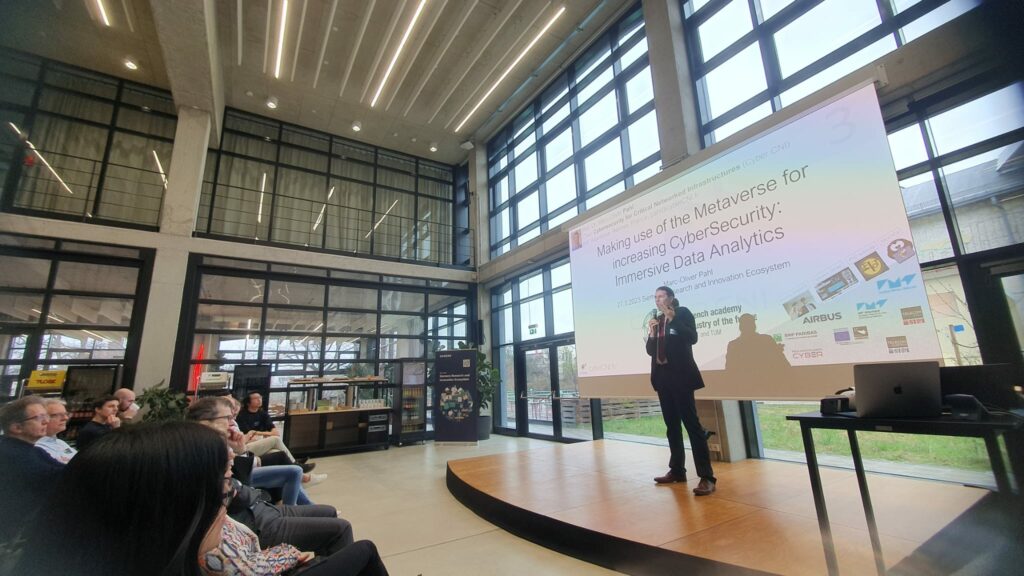
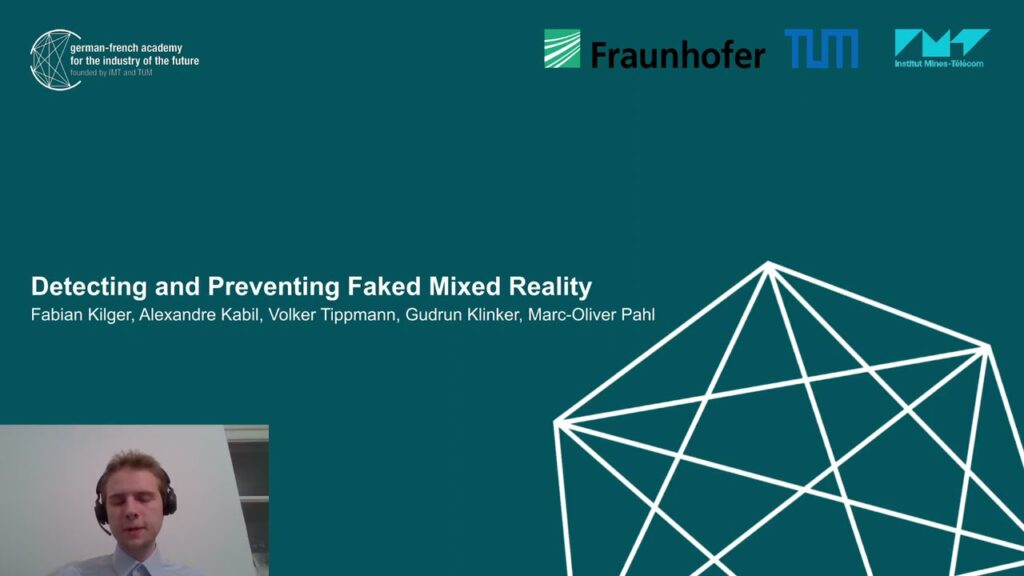
The TRUE-VIEW project presented a paper on Faked Mixed Reality at the 3rd FakeMM workshop. The paper discusses the risks coming with the increased use of virtual reality for critical tasks and its potential to fake reality within the cyberspace.
On Oct 30, 2020 we had a very successful kickoff of the TRUE-VIEW project funded by the German-French Academy for the Industry of the Future (GFA).
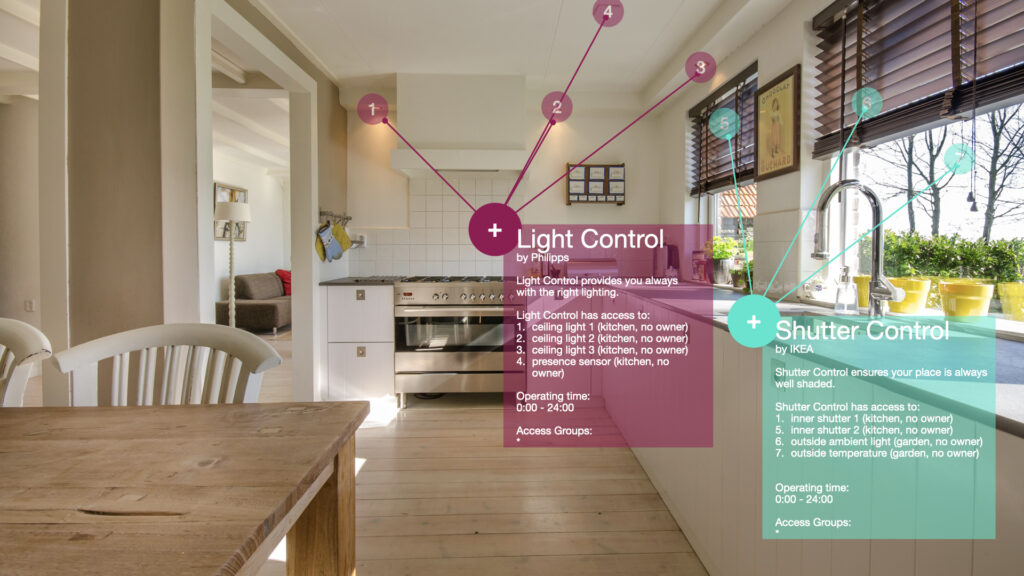
The TRUE-VIEW project is making ambient data flows such as data exchange between a certain sensor and a certain App visible with the help of Mixed Reality. By doing so, what is hidden in the ambiance will become perceivable to humans, and possible to investigate, analyze, understand, and form an opinion about.
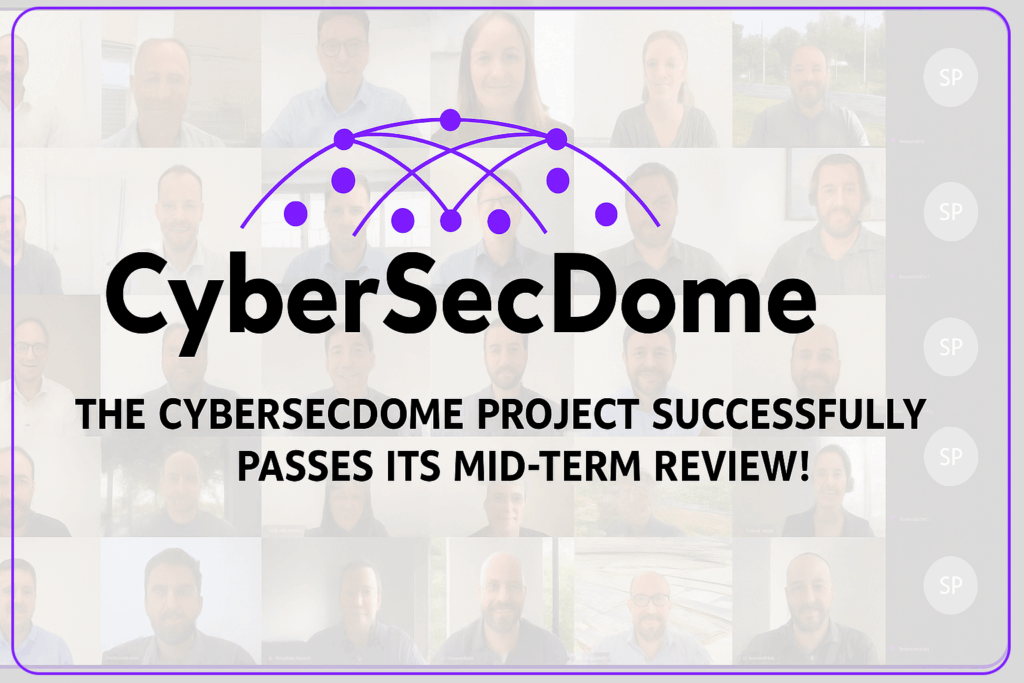
CyberSecDome, an EU-funded Horizon Europe project, has successfully completed its mid-term review, validating its innovative approach to cybersecurity through AI, XR interfaces, and digital twins.
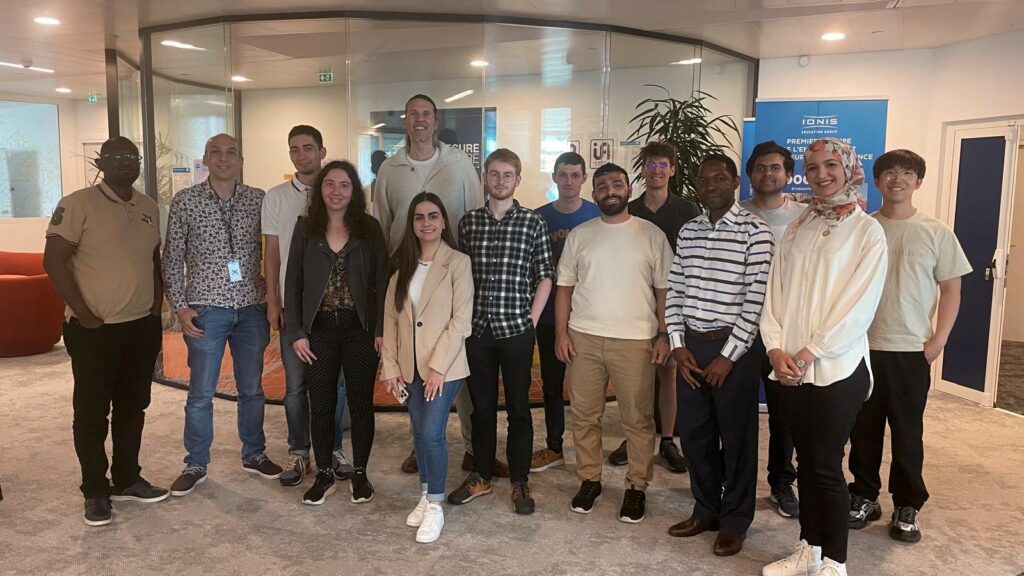
🇪🇺 Sometimes a birthday cake tells a bigger story than a hundred project reports.
When we cut the birthday cake at Viva Technology 2026 to celebrate the 10th anniversary of the German-French Academy for the Industry of the Future (GFA), I suddenly realized something.
We were not celebrating ten years of an institution.
We were celebrating ten years of relationships.
Researchers greeting collaborators they had not seen for years.
Students introducing mentors from another country.
Industrial partners already discussing the next joint project.
Friends meeting again.
Looking back over almost a decade, I realized that the Academy’s greatest achievement was never a single research project, a doctoral school or an innovation event.
It was creating a community.
That reflection led me to write something I had wanted to write for quite some time.
Not a birthday message.
Not a project report.
But an essay about something I have gradually come to regard as one of Europe’s most important strategic capabilities:
How do we build international innovation ecosystems?
Over the past ten years, I have had the privilege of helping shape this journey through collaborative research projects, educational initiatives such as Future-IoT, lifelong learning, strategy development and the Steering Committee of the Academy.
Along the way I discovered something that surprised even me.
Many of the most successful collaborations started with nothing more than a short conversation.
Projects ended.
Communities continued.
The article is my attempt to distill what ten years of Franco-German collaboration have taught me—not only about research and education, but about trust, ecosystem building and Europe’s future.
Among the ideas that stayed with me most are:
🔹 Research projects do not create ecosystems. People do.
🔹 Relationships deserve institutions.
🔹 Communities are Europe’s most valuable innovation infrastructure.
Thank you to everyone who helped build this remarkable community over the past decade—especially Paul-Guilhem Meunier, whose ability to cultivate ecosystems rather than merely manage projects has inspired me throughout these years, and to the many wonderful colleagues from IMT, TUM, DFH/UFA, industry and public institutions who made this journey possible.
I hope you enjoy reading it.
👉 Continue reading…
🇪🇺❤️🇫🇷🤝🇩🇪
This week at VivaTech 2026 in Paris, I had the pleasure of representing the German-French Academy for the Industry of the Future (GFA) as a member of its Steering Committee.
Hosted in the German Space under the leadership of Paul-Guilhem Meunier (Institut Mines-Télécom) and Axel Honsdorf (Bayerisch-Französisches Hochschulzentrum), we showcased how Franco-German collaboration can drive research, innovation, lifelong learning, and entrepreneurship.
Together with Mohammed Hamad and Michael Kühr, I presented research initiatives from IMT Atlantique and our partners, including:
🔹 TRUE-VIEW – making invisible digital interactions visible through Extended Reality to improve trust, explainability, and cyber resilience.
🔹 DTACK – creating Digital Twins of Cyberattacks for autonomous vehicles, connected mobility, and intelligent transportation systems.
🔹 CyberSecDome – a major European initiative bringing together Airbus, IMT Atlantique, and leading partners across Europe to strengthen the cybersecurity of critical infrastructures.
On the education side, I also presented:
🎓 Future-IoT, the flagship Franco-German doctoral school co-organized with Sebastian Steinhorst (Technical University of Munich), and
🎓 Cybersecurity Essentials: From Risk to Resilience, a MOOC developed within the GFA framework to strengthen cyber skills for SMEs and non-specialists.
The week enabled many inspiring exchanges with colleagues and friends from Institut Mines-Télécom, Technical University of Munich, DFH-UFA, Airbus, Fraunhofer, DFKI, Karlsruhe Institute of Technology, the German Cyber Agency, startups, and innovation actors from both countries.
We were also honoured by visits from François Delattre, Markus Blume, Jürgen Barke, Philippe Gréciano, Andrea von Hülsen-Esch, Virginie Jouhaud-Neutard, Laurence Le Coq, and Juliane Winkelmann.
A strong reminder that cybersecurity, digital sovereignty, innovation, education, and European cooperation are becoming inseparable pillars of our digital future.
#Cybersecurity #CyberResilience #CyberSecDome #CriticalInfrastructures #VivaTech #IMTAtlantique #Airbus #FutureIoT #DigitalTwins #ExtendedReality #DigitalSovereignty #EuropeanResearch #FrancoGermanCooperation
How does cybersecurity change when a country operates under war conditions?
Taras Panchenko provides operational and strategic insights from Ukraine on infrastructure resilience, cyberattacks against critical systems, communication challenges, and governance under extreme conditions.
A must-attend session for CISOs, researchers, and anyone working on critical infrastructure protection.
🔴 Live stream: https://TALK.CYBERcni.fr/stream
In an article published in the 10th issue of the Gesellschaft für Informatik’s .Inf magazine, Professor Marc-Oliver Pahl, holder of the Cyber CNI Chair at IMT Atlantique, warns of the upheavals caused by generative artificial intelligence. Between the creation of hyper-realistic content, extreme personalization of information and new forms of cyber-attack, he calls for a strengthening of mediacompetence and an urgent social debate on the uses of AI
Excited to share highlights from the EPITA and IMT Atlantique research exchange seminar on anomaly detection in cybersecurity! Brilliant minds from both institutions presented cutting-edge techniques and fostered insightful discussions. Looking forward to more such collaborative events!
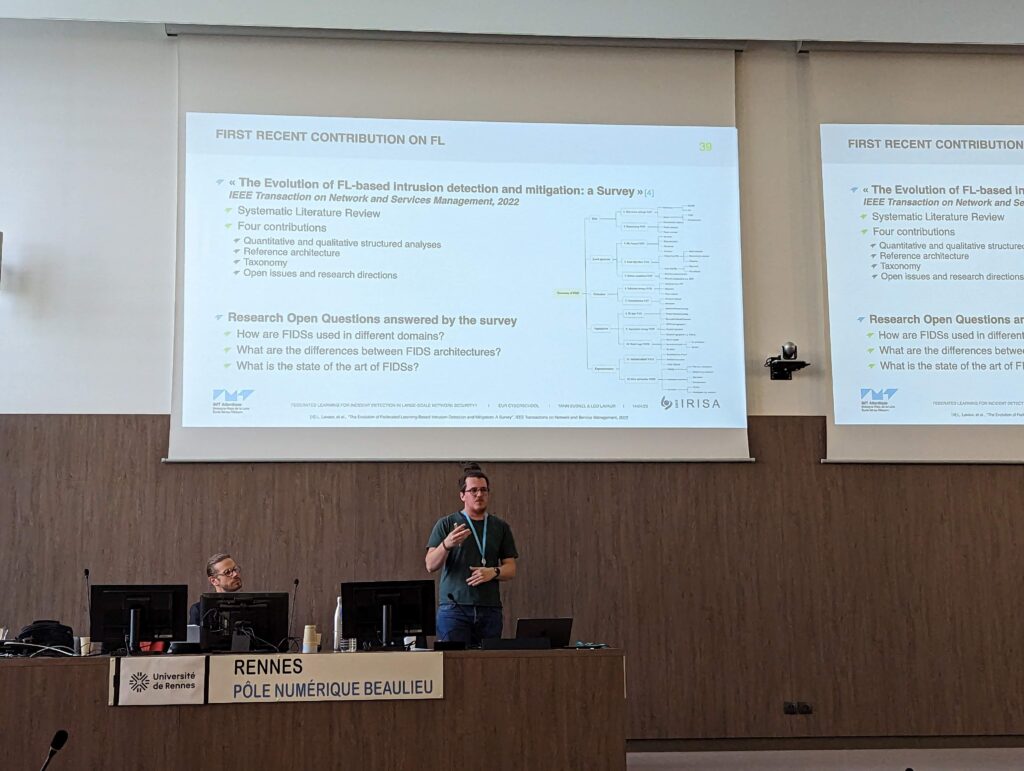
On April 14, 2023, Léo Lavaur and Yann Busnel, presented their work titled “The Value of Federated Learning in the Context of Incident Detection on Large-Scale Networks and/or Systems” at the Spring School of EUR Cyberschool .
The CyberSecDome project, led on the IMT Atlantique side by Marc-Oliver Pahl, has been accepted under the extremely competitive European call for projects “Improved monitoring of threats, intrusion detection and response in complex and heterogeneous digital systems and infrastructures” (HORIZON-CL3-2022-CS-01). CyberSecDome will integrate advanced virtual reality to extend the capabilities of security solutions, with the aim of enhancing the security, privacy and resilience of digital infrastructure.