Critical Infrastructure Cyber Resilience at Eurosatory 2026: Strengthening France’s and Europe’s Cyber Defence Ecosystem
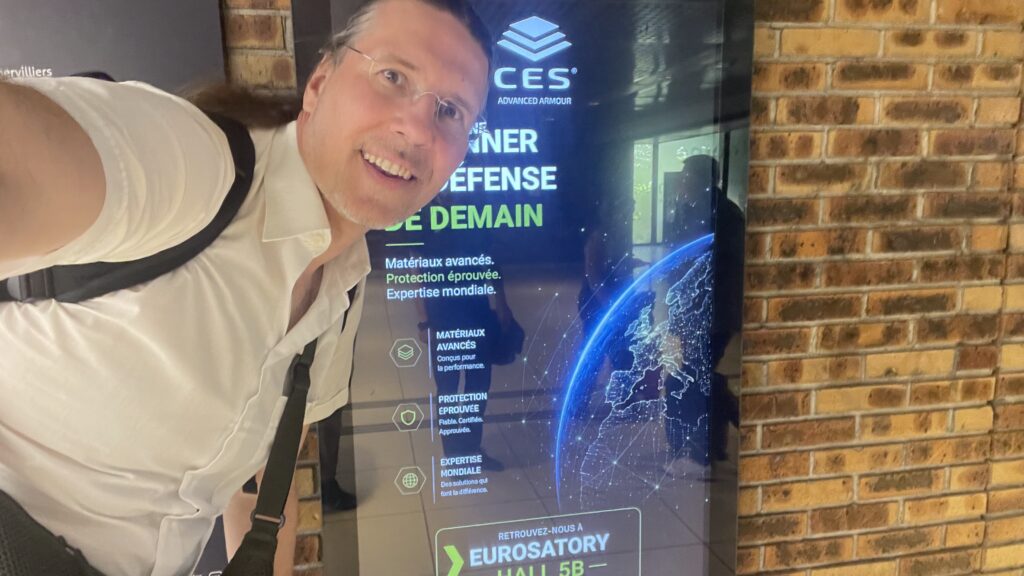
The Cybersecurity of Critical Infrastructures Chair (Cyber CNI) at IMT Atlantique works to strengthen the cyber resilience of France’s and Europe’s critical infrastructures through research, innovation, education, and close collaboration with industry and defence. This mission was at the heart of the Cyber CNI Chair‘s participation in Eurosatory 2026.
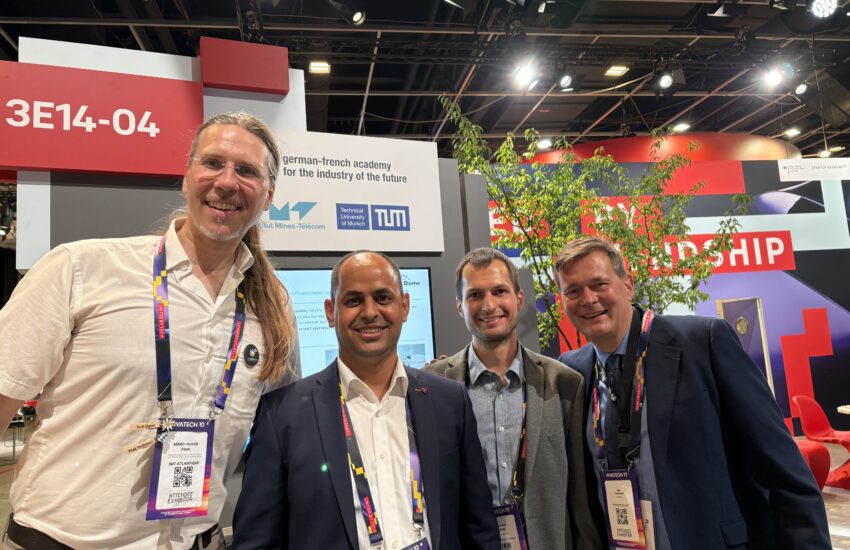
In parallel to presenting research and innovation projects at VivaTech, Eurosatory offered the opportunity to discuss how these technologies contribute to operational cyber resilience. Digital twins, cyber resilience methods, and collaborative European research become truly valuable when deployed to protect critical infrastructures and defence ecosystems.
For the Cybersecurity of Critical Infrastructures Chair (Cyber CNI) at IMT Atlantique, strengthening the resilience of these essential systems is at the heart of our mission. This requires not only excellent research but also continuous dialogue with industry, defence organisations, public authorities, and European partners.
Participation in Eurosatory 2026 therefore represented a natural opportunity for the Chair to engage with the actors shaping the future of defence, security, and cyber resilience.
Critical Infrastructure Cyber Resilience for France and Europe
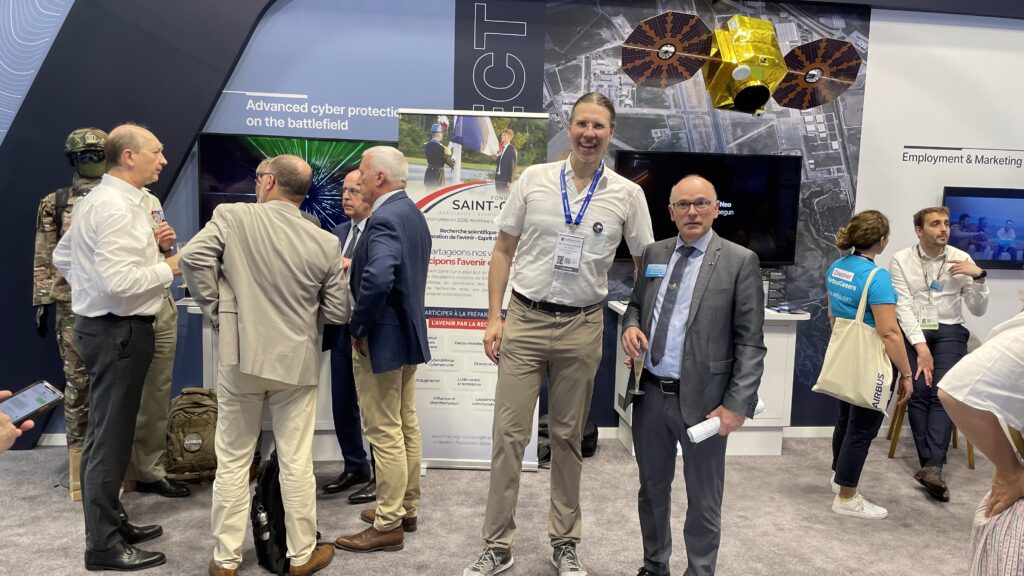
Eurosatory is one of the world’s leading exhibitions dedicated to defence and security. It brings together armed forces, government agencies, research institutions, industrial leaders, technology providers, and innovative SMEs to discuss the evolving security landscape.
Cybersecurity now plays a central role within this ecosystem.
Modern defence systems increasingly depend on software, cloud services, artificial intelligence, operational technologies, autonomous platforms, connected sensors, and secure communications. At the same time, these technologies are also fundamental to civilian critical infrastructures.
This convergence means that research addressing cybersecurity for critical infrastructures directly contributes to strengthening both economic resilience and national security.
For the Cyber CNI Chair, participation at Eurosatory therefore provides an important opportunity to ensure that our scientific work remains closely connected to operational realities and emerging strategic challenges.
Strengthening Long-Term Industrial Partnerships
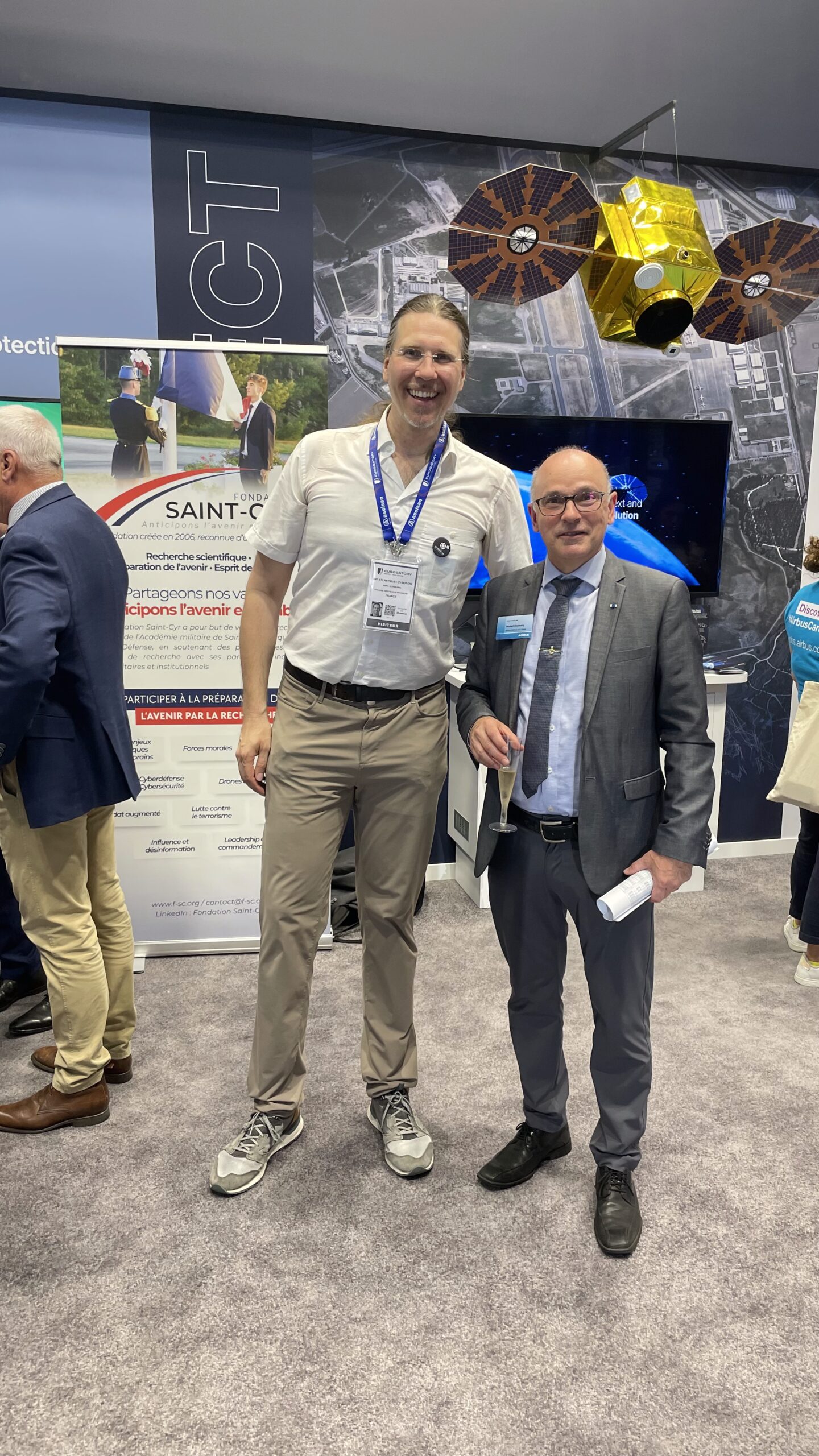
A particular highlight of Eurosatory 2026 was the opportunity to meet General (2S) Norbert Chassang, President of the Cybersecurity of Critical Infrastructures Chair (Cyber CNI), Cyber Defence Advisor at Airbus Defence and Space, and a long-standing contributor to France’s cyber defence ecosystem.
As President of the Chair, General Chassang plays a central role in connecting academic research with industrial expertise and operational needs. Our discussions focused on the evolving cyber threat landscape, the protection of critical infrastructures, and the importance of strengthening collaboration between research organisations, industry, and defence stakeholders.
Eurosatory also provided the opportunity to meet Nicolas Razy, Head of Cyber Programmes at Airbus, and Aurélie Laize, Head of the Airbus Defence and Space Cyber site in Rennes. Both have supported the Cyber CNI Chair since its early years and continue to contribute actively to its industrial ecosystem. Their continued engagement reflects the Chair’s long-term partnership with Airbus in advancing cybersecurity research for critical infrastructures. Although our discussions were brief during the exhibition, they reaffirmed our shared commitment to advancing cybersecurity research, cyber resilience, and European collaborative initiatives such as CyberSecDome.
These long-term relationships illustrate one of the defining strengths of the Cyber CNI Chair: sustained collaboration between academia and industry. Rather than isolated research projects, the Chair aims to build enduring partnerships that ensure scientific advances remain aligned with operational needs and contribute to the protection of France’s and Europe’s critical infrastructures.
A Growing Ecosystem of Cybersecurity Chairs
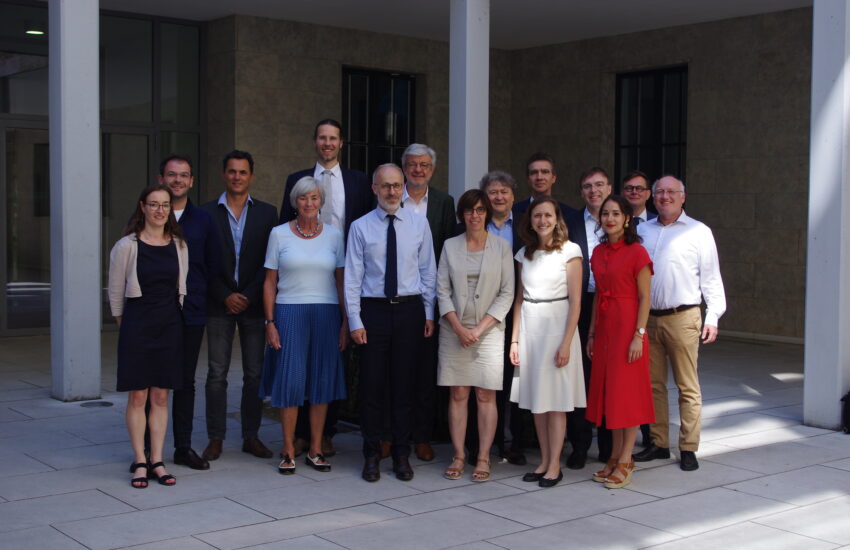
Another valuable discussion took place with Nicolas Belloir from the Académie militaire de Saint-Cyr Coëtquidan, following the launch of the new Airbus–Saint-Cyr Chair on Lutte Informatique d’Influence.
The creation of this new chair illustrates how cybersecurity has evolved beyond purely technical protection. Information operations, influence campaigns, cognitive security, and hybrid threats have become essential dimensions of modern cyber defence.
Together with initiatives such as the Cyber CNI Chair, this demonstrates the growing commitment of French academia, industry, and defence organisations to jointly develop the scientific expertise required to address future cyber challenges.
From Research to Operational Impact
One of the defining characteristics of the Cyber CNI Chair is its close interaction with industrial and institutional partners.
Research on cybersecurity only creates value if it can ultimately strengthen the resilience of operational systems.
Current research activities of the Chair address topics including:
- Cybersecurity of critical infrastructures
- Cyber resilience
- Artificial Intelligence for cybersecurity
- Digital twins for cyber testing
- Operational Technology (OT) security
- Human-centred cybersecurity
- Cyber-physical systems
- Security validation and testing
- Digital sovereignty
Projects such as CyberSecDome, developed together with Airbus and numerous European partners, illustrate how collaborative research can deliver practical capabilities for protecting Europe’s critical infrastructures against increasingly sophisticated cyber threats.
The discussions held throughout Eurosatory confirmed the growing importance of combining scientific excellence with operational experience to anticipate future cybersecurity challenges.
Strengthening France’s and Europe’s Cyber Resilience
Cybersecurity has become a strategic capability that underpins economic prosperity, societal resilience, and national security.
For the Cyber CNI Chair, contributing to this effort means more than conducting excellent research. It means building bridges between academia, industry, defence organisations, and public authorities to develop solutions that can be deployed where they matter most.
Participation in Eurosatory 2026 reaffirmed the importance of these collaborations.
CyberSecDome, developed together with Airbus and numerous leading European research and industrial partners, illustrates how collaborative research can deliver practical capabilities for protecting critical infrastructures against increasingly sophisticated cyber threats.
Through strategic partnerships, European research projects such as CyberSecDome, advanced education initiatives, and close cooperation with industrial and defence stakeholders, the Cyber CNI Chair continues to contribute to strengthening the cybersecurity of France’s and Europe’s critical infrastructures.
As digital technologies become ever more central to our societies, protecting them becomes a shared responsibility. The Cyber CNI Chair is proud to play its part in advancing research, fostering collaboration, and supporting the resilience of the infrastructures that underpin our security, economy, and daily lives.
The Cyber CNI Chair was created to strengthen the cybersecurity of critical infrastructures through close collaboration between academia, industry, and public institutions. Eurosatory 2026 once again demonstrated the importance of this mission. As cyber threats continue to evolve, strengthening the resilience of critical infrastructures requires long-term cooperation between academia, industry, defence, and public authorities. The Cyber CNI Chair remains committed to advancing this collaboration through excellent research, strategic partnerships, and the education of the next generation of cybersecurity experts.
Useful Links

Marc-Oliver is an adjunct professor of Carleton University in Canada. Marc-Oliver’s research focus is on a holistic approach to cybersecurity. He is an experienced teacher and an eLearning pioneer, holding several teaching awards.
Marc-Oliver holds a Diploma from University of Tübingen and a PhD from Technical University of Munich.
Marc-Oliver is Vice President of the German Chapter of the Association for Computing Machinery (ACM) (https://germany.acm.org/). He heads the Future Education activities of the German-French Academy for the Industry of the Future (https://future-industry.org/).
Marc-Oliver’s research focus is on a holistic approach to cybersecurity. He works on security-by-design, anomaly detection, human-in-the-loop, and automation. His goal is making cybersecurity manageable, resulting in highly resilient and reliable systems. Marc-Oliver publishes regularly in the network and service management and security communities.
- European Innovation Ecosystems: Lessons from Ten Years of the German-French Academy for the Industry of the Future - July 7, 2026
- France’s Cybersecurity Chairs Unite at the École Militaire: Strengthening a National Ecosystem for Cybersecurity Research - June 25, 2026
- Critical Infrastructure Cyber Resilience at Eurosatory 2026: Strengthening France’s and Europe’s Cyber Defence Ecosystem - June 24, 2026