Chaire Cyber CNI

Chaire Cyber CNI – Cybersecurity for Critical Networked Infrastructures

CyberSecDome Final Plenary Meeting Brings Partners Together in Chania

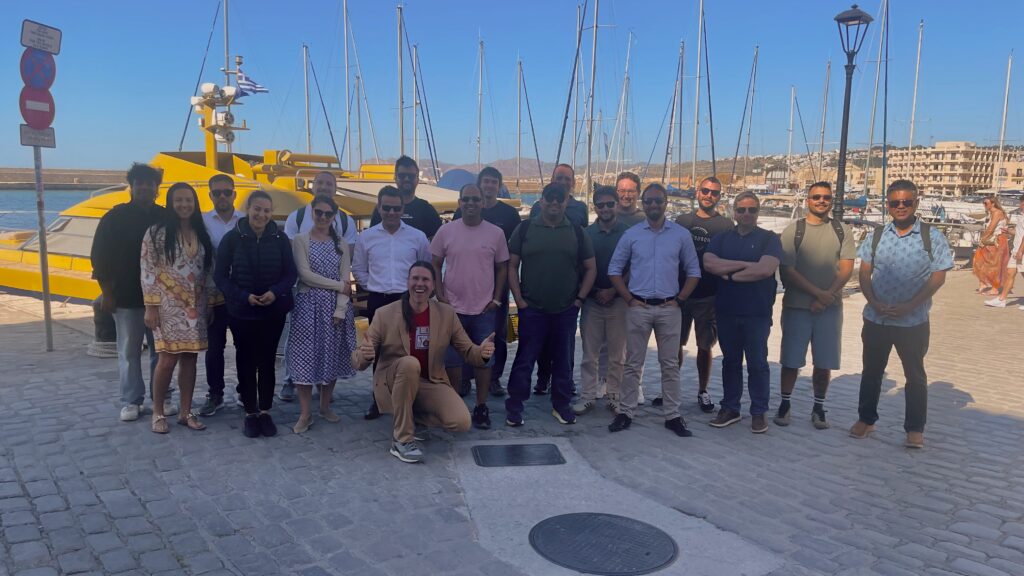
The final plenary meeting of the CyberSecDome project took place this week in Chania, Crete, bringing together partners from across Europe as we prepare for the project’s final review.

Over two days, consortium members discussed pilot progress, platform integration, exploitation activities, Open Call projects, and the next steps towards demonstrating innovative approaches for cyber defence, cyber resilience, incident investigation, and incident response using immersive XR and VR technologies.

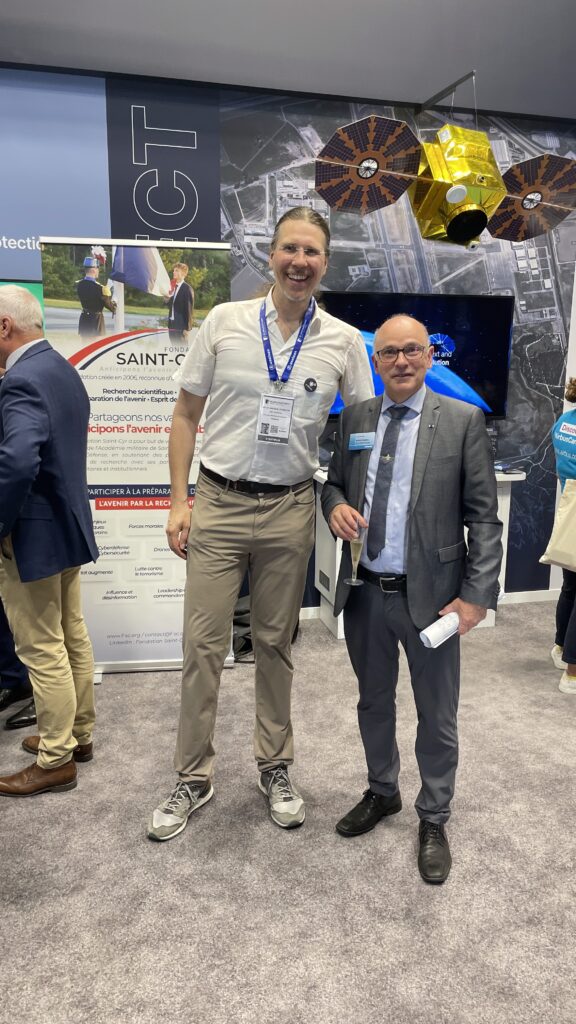
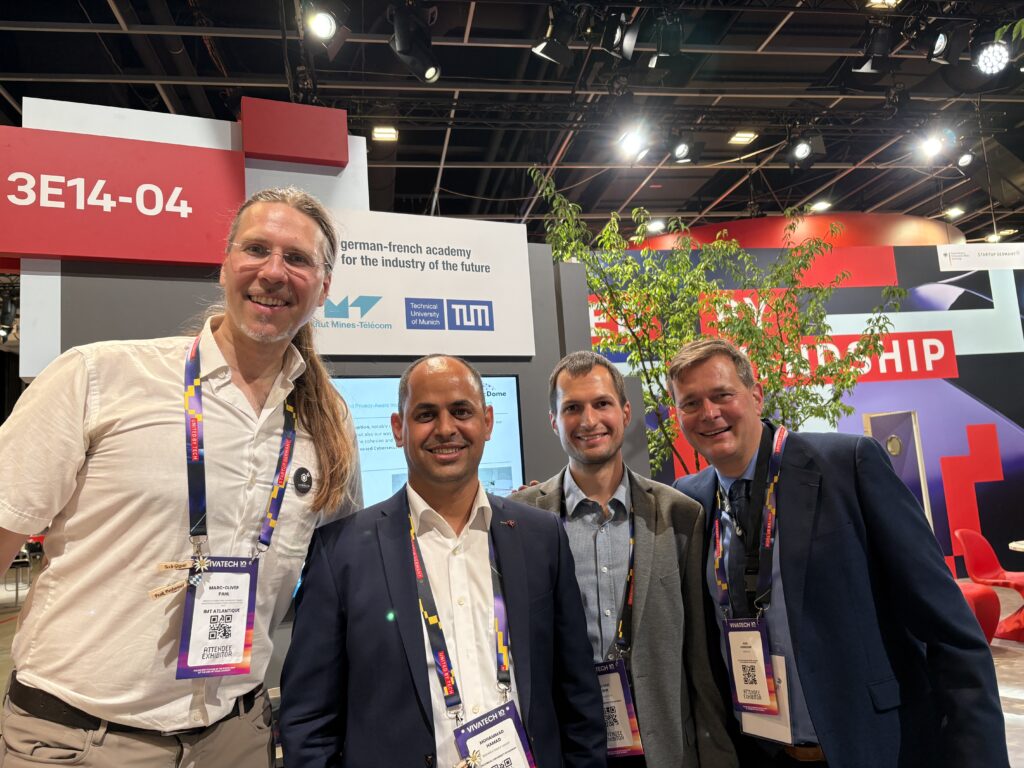
It was a pleasure to represent the Chair Cyber CNI, IMT Atlantique, and IRISA alongside Fabien Eyssartier and to exchange with colleagues from across the consortium.

A big thank you to the Technical University of Crete for hosting the event and to all partners for the excellent collaboration throughout the project.

Looking forward to the final project review and to showcasing the results achieved together by MAGGIOLI, Technical University of Crete, IMT Atlantique, IRISA, OTE Group of Companies, Athens International Airport, Airbus CyberSecurity, ITML, AEGIS IT Research, Technical University of Munich, CyberEthics Lab, and all consortium members.

Special thanks to Armend Duzha, Eleni Pateraki, Gregory Chrysos, Andreas Tsigkos, Spiros Fotis, Evangelos Raptis, Vasilis Kyriazopoulos, Gary Joel Pereira, Maxime Bègue, Sébastien Peynet, Mohammad A. Chaqfeh, Marc-Oliver Pahl, Fabien Eyssartier, and the many researchers, engineers, and innovators who contributed to CyberSecDome.

#CyberSecDome #Cybersecurity #CyberDefence #CyberResilience #XR #VirtualReality #IncidentResponse #SOC #CriticalInfrastructure #HorizonEurope #ResearchAndInnovation #IMTAtlantique #IRISA #CyberCNI

CyberSecDome XR Cybersecurity Demo at IRISA

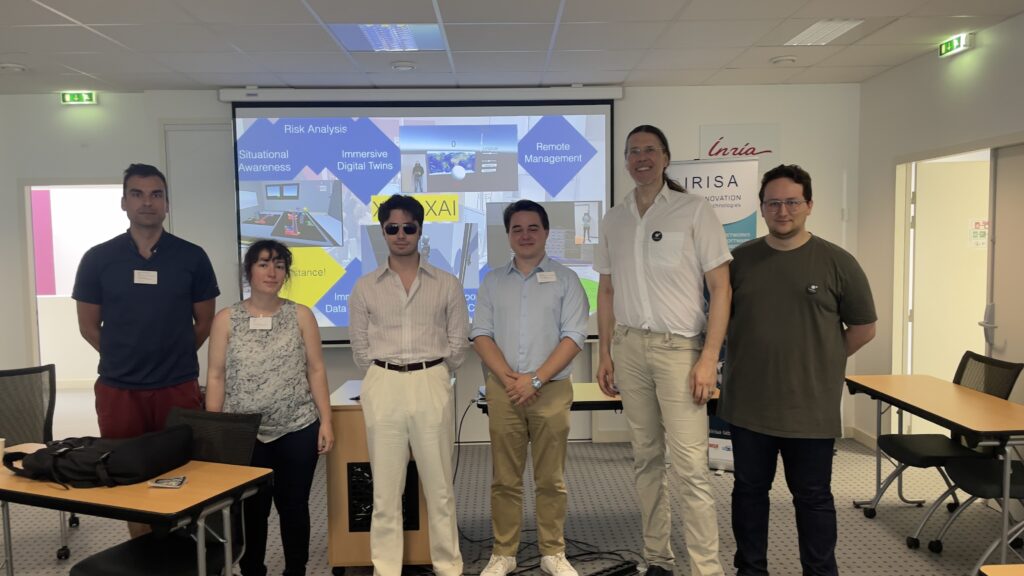
A great day yesterday presenting the European project CyberSecDome at the CNRS UMR IRISA laboratory in Rennes during the visit of the Jeunes IHEDN.

Many thanks to Olivier Barais for opening the session and highlighting the strong cybersecurity ecosystem within IRISA.

As part of the activities carried by the Chaire Cybersécurité des Infrastructures Critiques within the IRISA environment, we presented our work on next-generation cybersecurity interfaces combining AI and XR technologies to improve situational awareness and reduce the cognitive load of cyber experts facing increasingly complex infrastructures.

Marc-Oliver Pahl introduced the CyberSecDome vision, architecture, and operational context, while Fabien Eyssartier delivered an impressive live demonstration of the immersive platform.

The discussions with participants were extremely engaging, ranging from operational cybersecurity to resilience and disinformation challenges. Seeing participants directly experiment with the interfaces and discuss future applications was particularly rewarding.

CyberSecDome continues to demonstrate how Europe can combine AI, immersive technologies, and operational cybersecurity expertise to strengthen the resilience of critical infrastructures.

A real pleasure to support IRISA during this successful event — and we look forward to many future collaborations with the IHEDN community.

#CyberSecurity #CyberDefense #XR #VirtualReality #AI #CriticalInfrastructure #CyberResilience #SituationalAwareness #HorizonEurope #IRISA #IMTAtlantique #CyberSecDome

Wrapping Up an Inspiring Journey in the New Master Cybersecurity Program at IMT Atlantique

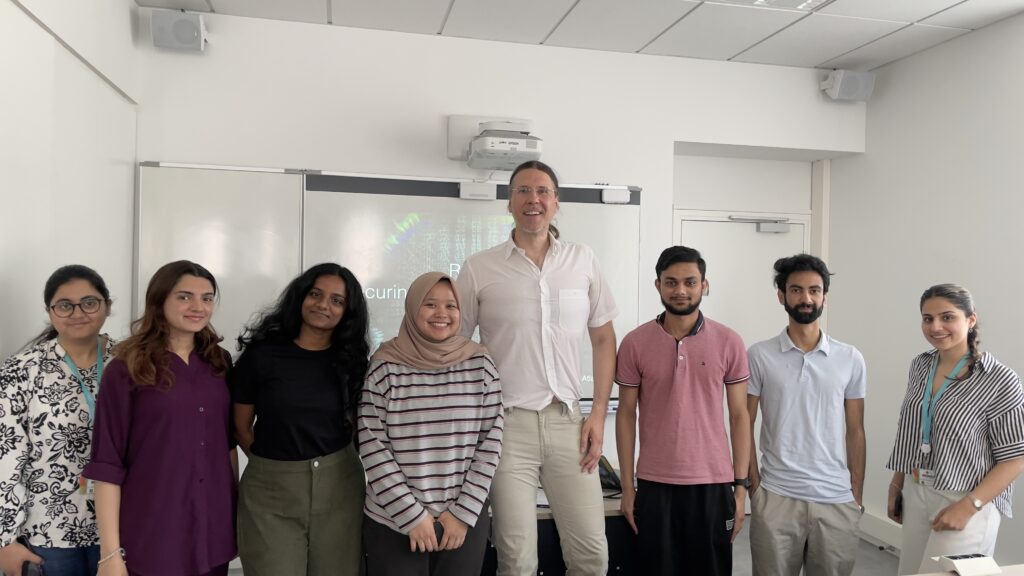
Today was the final session of my teaching engagement in the new Master Cybersecurity program at IMT Atlantique in Rennes — and what an inspiring experience it has been.

Over the past weeks, I had the pleasure of teaching a fantastic group of students in our course on *Securing Critical Infrastructures*. With 8 female and 2 male students, the class brought together strong technical backgrounds, curiosity, critical thinking, and excellent discussions throughout the course.

We explored topics such as:
🔹 OT vs IT security
🔹 Industrial Control Systems (ICS)
🔹 Attack chains and cyber resilience
🔹 Security-by-design
🔹 Monitoring and anomaly detection
🔹 Human-centered cybersecurity
🔹 QUANTUMINSERT, Snowden, and the ethics of cybersecurity

For today’s final recap session before Friday’s exam, we connected all course topics into one big picture: how modern connectivity creates both enormous opportunities and major attack surfaces for critical infrastructures.

I was also very happy to invite two colleagues working with me on current cybersecurity projects:

🔹 Axel Dupraz presented hands-on demonstrations around real-world critical infrastructure cybersecurity challenges and operational exercises.

🔹 Fabien Eyssartier, working with me on the Horizon Europe project CyberSecDome, demonstrated next-generation cybersecurity interfaces and immersive approaches for future SOC environments. This led to fascinating discussions on usability, operator support, situational awareness, and human-centered cybersecurity.

One thing became very clear once again:
Cybersecurity is not only about technology. It is also about humans, communication, decision-making, resilience, and responsibility.

A huge thank you to all students for the excellent atmosphere, the energy, and the many thoughtful discussions throughout the course. Teaching becomes truly rewarding when students actively contribute their own perspectives and experiences.

Now only the written exam on Friday remains.

Good luck to all of you — and thank you for this great experience!

#Cybersecurity #CriticalInfrastructure #ICS #OTSecurity #CyberResilience #SecurityByDesign #CyberDefense #CyberSecDome #HorizonEurope #IndustrialCybersecurity #HumanCenteredCybersecurity #IMTAtlantique #Rennes #Teaching #CyberEducation

The “Management of Complex Threats” workshop at IEEE/IFIP NOMS 2026 was a full success

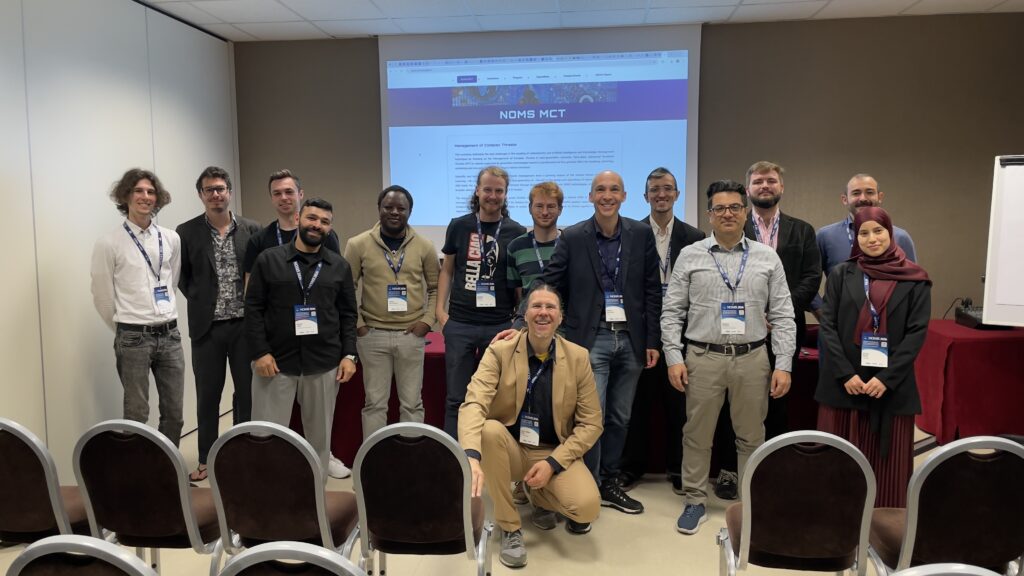
Great discussions today at the “Management of Complex Threats” workshop at IEEE/IFIP NOMS 2026 in Rome!

Together with Pierre Parrend and colleagues from IMT Atlantique and EPITA, and with the support of the CyberSecDome Horizon Europe project, we brought together around 20 researchers and practitioners from across Europe and Asia to discuss the future of AI-driven cybersecurity and the management of complex threats.

The workshop showcased an impressive breadth of topics:
• uncertainty-aware traffic classification from researchers at Czech Technical University in Prague
• adaptive IoT anomaly detection from National Institute of Informatics
• federated security gateways for LLM agents from Hochschule Furtwangen University
• autonomous AI-driven penetration testing from University of Calabria
• LLM-based honeypots from researchers in France
• cyber-physical attacks against cooperative robot systems from Birla Institute of Technology and Science Pilani
• and topology-based cyberattack detection for water distribution systems involving University of Strasbourg, Karlsruhe Institute of Technology, and EPITA.

I was also particularly happy to see strong contributions from the broader Cyber CNI chair ecosystem at IMT Atlantique:

Mathis Durand (Cyber CNI, CNRS UMR IRISA, IMT Atlantique) presented joint work with Yvon Kermarrec and Marc-Oliver Pahl on SSH honeypot realism and fingerprinting resistance. Their work analyzed how ethical hackers detect deception systems in practice and derived a taxonomy of effective honeypot detection techniques.

Mohammed Mezaouli (CNRS Lab-STICC, IMT Atlantique) presented joint work with Yehya Nasser, Samir Saoudi, and Marc-Oliver Pahl on AI-based real-time anomaly detection for embedded C functions using instruction-level traces and current measurements — an exciting step toward protecting resource-constrained IoT systems against zero-day style attacks.

One recurring theme across the workshop was clear: AI is both the attack surface and the defense mechanism. From semantic attacks against LLMs to autonomous penetration testing and trustworthy AI-driven defense systems, future 6G, IoT, and industrial infrastructures will require fundamentally new approaches to resilience and operational security.

A big thank you to all speakers, authors, and participants for the technically deep discussions and excellent atmosphere throughout the day!

[T45] Living in a warzone – how cybersecurity changes in times of war at the example of Ukraine – Taras Panchenko (National University of Kyiv, Ukraine)

How does cybersecurity change when a country operates under war conditions?

Taras Panchenko provides operational and strategic insights from Ukraine on infrastructure resilience, cyberattacks against critical systems, communication challenges, and governance under extreme conditions.

A must-attend session for CISOs, researchers, and anyone working on critical infrastructure protection.

🔴 Live stream: https://TALK.CYBERcni.fr/stream

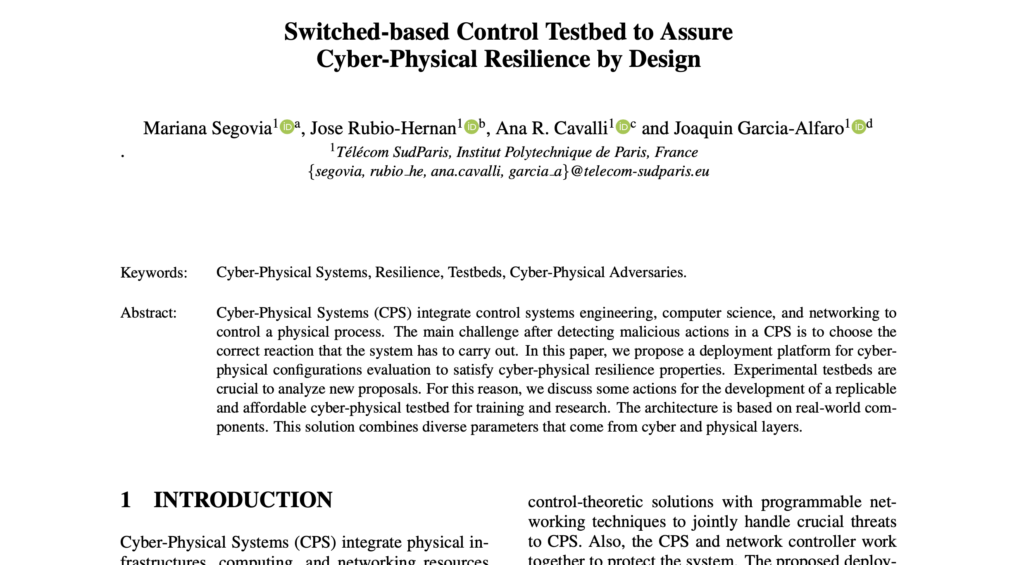
“Switched-based Control Testbed to Assure Cyber-Physical Resilience by Design“ publié à SecCrypt 2022

Notre doctorante Mariana Segovia (TSP, Post-Doc 1 : Jumeaux numériques et cyber résilience) participera au 19e « International Conference on Security and Cryptography » (SECRYPT 2022) qui se tiendra du 11 au 13 juillet 2022 à Lisbonne (Portugal). Vous trouverez plus d’informations sur la conférence ici : https://secrypt.scitevents.org/

View More