Wrapping Up an Inspiring Journey in the New Master Cybersecurity Program at IMT Atlantique
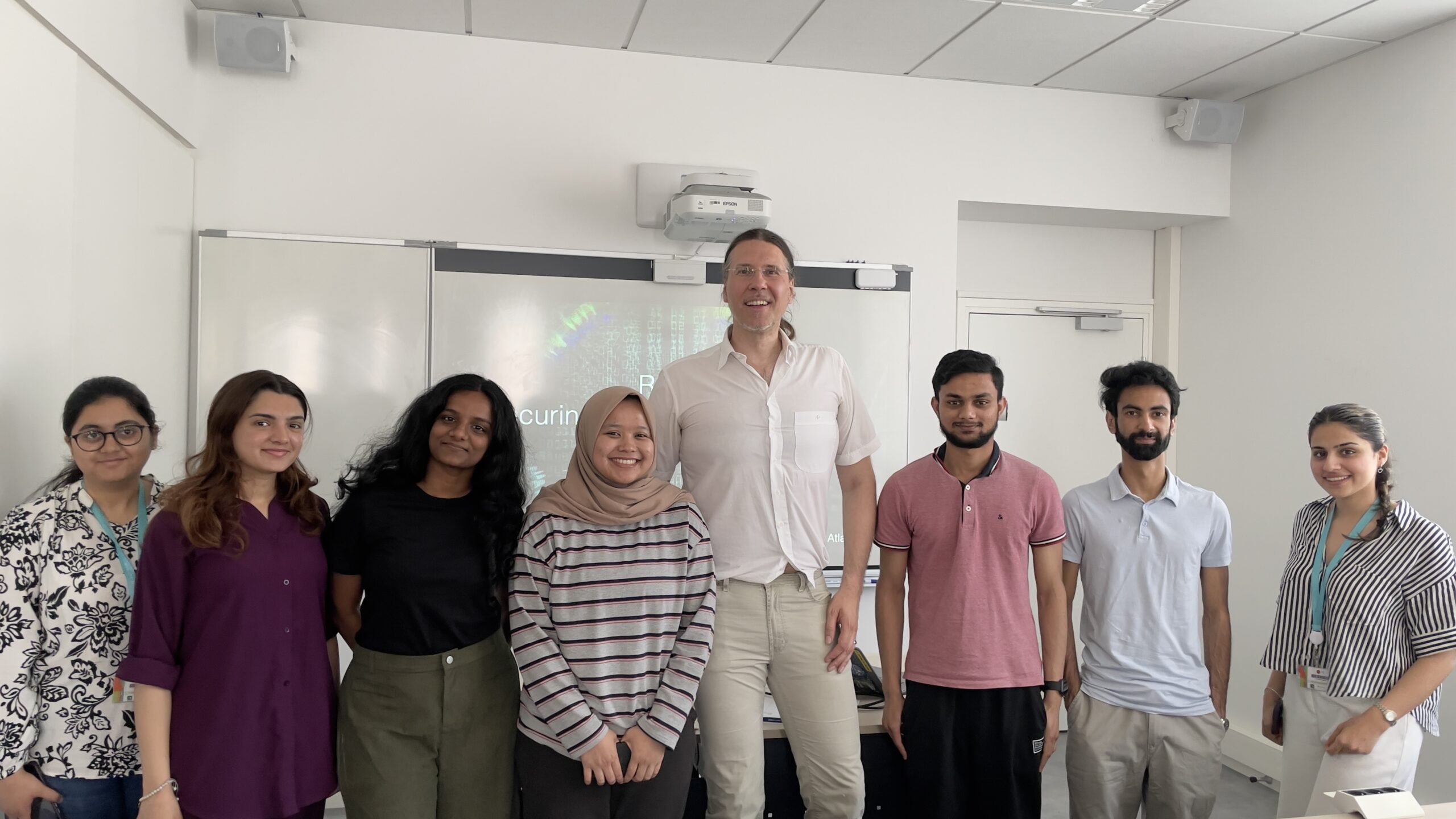
From our chairholder Marc-Oliver Pahl: This week marked the final teaching session of my contribution to the new Master Cybersecurity program in Rennes — and what a rewarding experience it has been.
Over the past weeks, I had the pleasure of teaching a wonderful group of students in our course on Securing Critical Infrastructures. The class, composed of eight female and two male students, brought together highly motivated participants with diverse technical backgrounds, strong curiosity, and an impressive willingness to engage deeply with complex cybersecurity topics.
From Industrial Control Systems (ICS) and Operational Technology (OT) security to attack chains, anomaly detection, security-by-design, resilience engineering, and human-centered cybersecurity, the discussions throughout the course were consistently insightful and dynamic. What made this teaching engagement particularly enjoyable was not only the technical level of the students, but also their openness to questioning assumptions, debating tradeoffs, and connecting cybersecurity challenges to real-world societal impacts.
Why teaching matters
Beyond the course itself, such engagements are particularly important because they allow us to work closely with young talents who will become future multipliers in cybersecurity. These students will carry their knowledge, mindset, and professional values into industry, research, and public institutions. For the chair, this type of teaching activity is therefore much more than education alone: it is a strategic investment into the next generation of cybersecurity experts and leaders. It also creates valuable opportunities for exchange between academia and industry and serves as a natural recruitment channel for both the chair and its industrial partners, helping identify highly motivated and talented students early on.
A Final Recap Before the Exam
Today’s final session focused on a complete recap of the course in preparation for Friday’s written exam. Rather than revisiting isolated definitions, we reconstructed the entire “big picture” together:
- how IT infrastructures become the attack surface of OT systems,
- how cyberattacks evolve into physical consequences,
- how attackers pivot through trusted paths,
- why legacy protocols remain vulnerable,
- and why resilience, monitoring, and human-centered design are essential for defending critical infrastructures.
Seeing the students connect the different concepts into one coherent mental model was especially satisfying.
Hands-On Demonstrations from Current Research Activities
To conclude the course, I invited two colleagues from our ongoing research and engineering activities to share demonstrations from current projects.
Axel Dupraz — Hands-On Critical Infrastructure Security
My engineer Axel Dupraz presented practical demonstrations around cybersecurity challenges in critical infrastructures that he is currently working on. The students were able to see concrete operational scenarios and discuss realistic attack and defense mechanisms beyond textbook examples.
The exchange led to many questions around:
- industrial environments,
- operational constraints,
- detection challenges,
- and the gap between theory and deployment reality.
Fabien Eyssartier — Human-Centered Cybersecurity and CyberSecDome
My engineer Fabien Eyssartier, who works with me on the European Horizon Europe project CyberSecDome, demonstrated next-generation cybersecurity interfaces and immersive approaches for cyber defense operations.
This opened particularly interesting discussions around:
- human-centered cybersecurity,
- operator usability,
- situational awareness,
- cognitive overload,
- and the role of visualization and interaction design in future Security Operations Centers (SOCs).
One of the key takeaways from this final discussion was that cybersecurity is not only about technology. It is also about:
- humans,
- decision-making,
- communication,
- trust,
- and resilience under pressure.
Thank You
I would like to sincerely thank all students for their engagement, energy, and openness throughout the course. Teaching becomes truly enjoyable when students actively participate, challenge ideas, and contribute their own perspectives — and this class did exactly that.
It was a real pleasure to accompany this first cohort of the new cybersecurity master program in Rennes.
Now only one final step remains: the exam on Friday.
Good luck to all students — and thank you again for the excellent atmosphere, the great discussions, and the shared enthusiasm for cybersecurity.
I am looking forward to seeing where your future journeys in cybersecurity will lead.
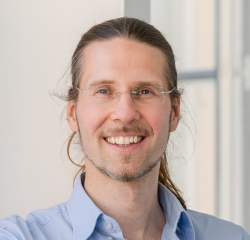
Marc-Oliver is an adjunct professor of Carleton University in Canada. Marc-Oliver’s research focus is on a holistic approach to cybersecurity. He is an experienced teacher and an eLearning pioneer, holding several teaching awards.
Marc-Oliver holds a Diploma from University of Tübingen and a PhD from Technical University of Munich.
Marc-Oliver is Vice President of the German Chapter of the Association for Computing Machinery (ACM) (https://germany.acm.org/). He heads the Future Education activities of the German-French Academy for the Industry of the Future (https://future-industry.org/).
Marc-Oliver’s research focus is on a holistic approach to cybersecurity. He works on security-by-design, anomaly detection, human-in-the-loop, and automation. His goal is making cybersecurity manageable, resulting in highly resilient and reliable systems. Marc-Oliver publishes regularly in the network and service management and security communities.
- European Innovation Ecosystems: Lessons from Ten Years of the German-French Academy for the Industry of the Future - July 7, 2026
- France’s Cybersecurity Chairs Unite at the École Militaire: Strengthening a National Ecosystem for Cybersecurity Research - June 25, 2026
- Critical Infrastructure Cyber Resilience at Eurosatory 2026: Strengthening France’s and Europe’s Cyber Defence Ecosystem - June 24, 2026