Chaire Cyber CNI

Chaire Cyber CNI – Cybersecurity for Critical Networked Infrastructures

France’s Cybersecurity Chairs Unite at the École Militaire: Strengthening a National Ecosystem for Cybersecurity Research

A strong cybersecurity ecosystem is built on collaboration, trust, and long-term partnerships.

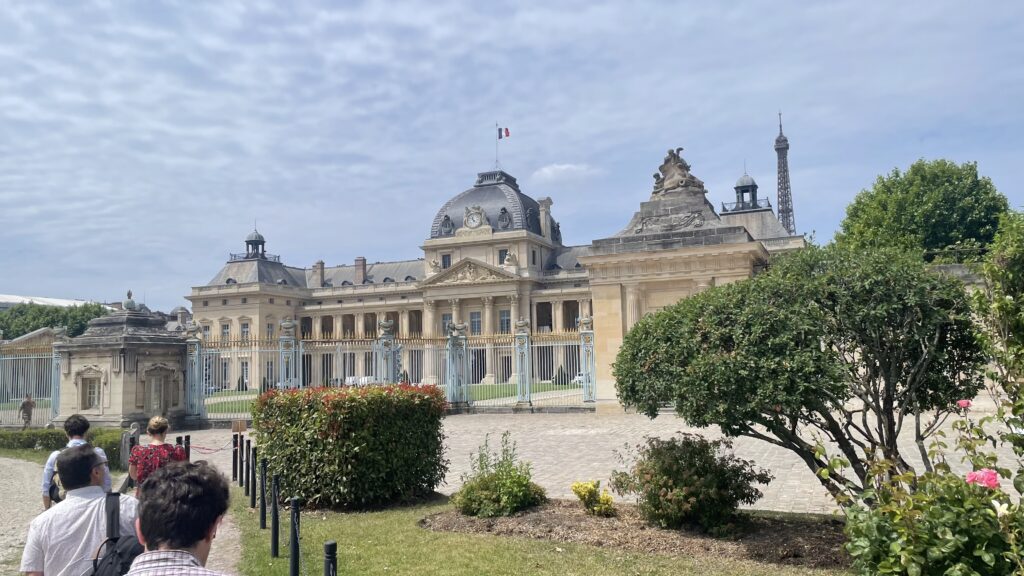
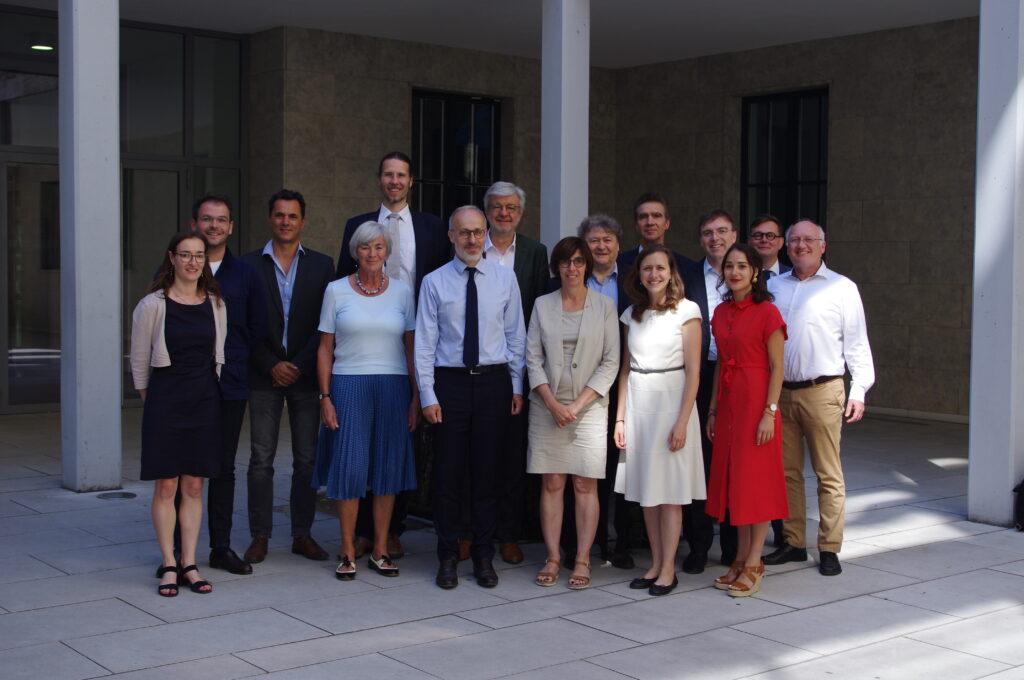
I was delighted to represent the **Cybersecurity of Critical Infrastructures (Cyber CNI) Chair** at **IMT Atlantique** during the annual inter-chair meeting organised by **COMCYBER** at the historic **École Militaire** in Paris—a symbolic venue that has educated French military leaders since the reign of Louis XV and today hosts the **École de Guerre**.

The meeting brought together the holders and representatives of France’s leading cybersecurity chairs to exchange research results, identify new scientific synergies, and prepare the joint scientific programme for **European Cyber Week 2026**.

The diversity of expertise represented was remarkable, spanning **critical infrastructures**, **digital sovereignty**, **naval cybersecurity**, **IoT security**, **complex systems**, **cryptography**, **cyber influence**, and **operational cyber defence**.

I particularly enjoyed catching up with many long-standing colleagues and friends, including **Patrice Jaouen** (COMCYBER), **Jean Peeters** (IHEDN – Chaire Souveraineté Numérique et Cyber), **David Brosset** (Cyber Navale – École navale), **Roland Gautier** (Université de Bretagne Occidentale), **Nicolas Belloir** (Académie militaire de Saint-Cyr Coëtquidan), **Ivan Neyret**, **Géraud Canet** and **Gaëlle Mistrulli** (CEA), **Jérémy Buisson** (École de l’Air et de l’Espace), **Salah Sadou** (Université Bretagne Sud), and **Sébastien Canard** (Télécom Paris).

These exchanges remind me that cybersecurity research is fundamentally a team effort. The strength of the French ecosystem comes not only from the excellence of its individual chairs but also from the trust, openness, and long-term collaboration between them.

I am proud that the **Cyber CNI Chair**, one of France’s leading academic–industrial cybersecurity chairs, contributes to this national effort by connecting research, education, industry, defence, and European collaboration in support of the cybersecurity and resilience of France’s and Europe’s critical infrastructures.

Many thanks to **Patrice Jaouen** and **COMCYBER** for organising another excellent edition. Looking forward to continuing these collaborations and to meeting everyone again at **European Cyber Week 2026**.

#Cybersecurity #CyberCNI #COMCYBER #IMTAtlantique #EuropeanCyberWeek #CriticalInfrastructures #CyberResilience #CyberDefence #Research #Innovation #DigitalSovereignty #CEA #TélécomParis #ÉcoleNavale #SaintCyr #IHEDN #France #CyberSecDome

Critical Infrastructure Cyber Resilience at Eurosatory 2026: Strengthening France’s and Europe’s Cyber Defence Ecosystem

Protecting critical infrastructures requires close collaboration between academia, industry, and defence. Eurosatory 2026 once again demonstrated how strong this ecosystem has become.

As holder of the **Cybersecurity of Critical Infrastructures (Cyber CNI) Chair** at **IMT Atlantique**, I had the pleasure of representing the Chair at **Eurosatory 2026**, exchanging with long-standing partners and colleagues committed to strengthening France’s and Europe’s cyber resilience.

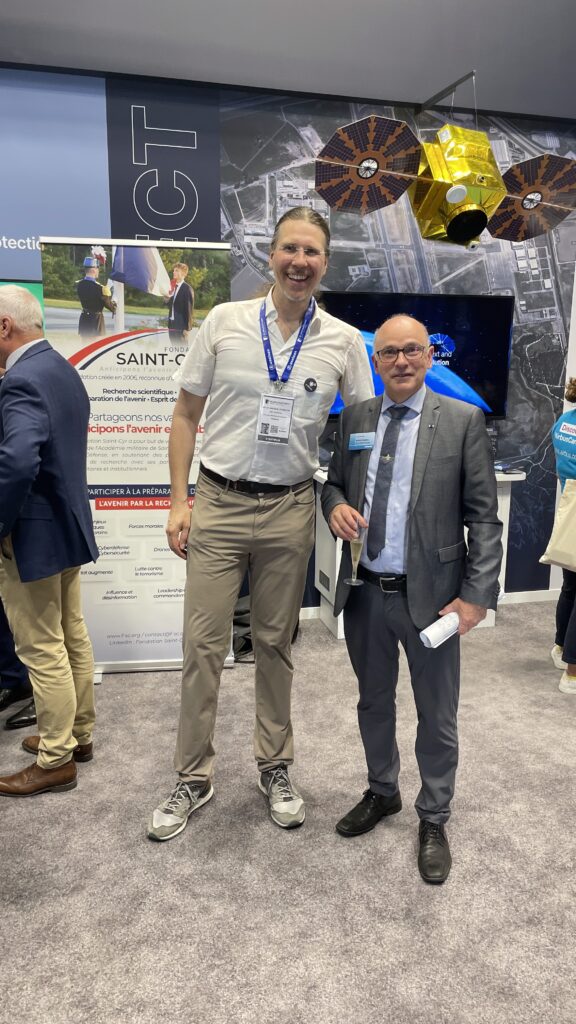
A particular pleasure was meeting **General (2S) Norbert Chassang**, President of the Cyber CNI Chair and Cyber Defence Advisor at **Airbus Defence and Space**, to discuss the evolving cyber threat landscape and the strategic role of research in protecting critical infrastructures.

I also enjoyed catching up with **Nicolas Razy**, Head of Cyber Programmes at **Airbus**, and **Aurélie Laize**, Head of the **Airbus Defence and Space Cyber** site in Rennes. Both have been strong supporters of the Cyber CNI Chair for many years and continue to contribute actively to its industrial ecosystem.

Another highlight was discussing with **Nicolas Belloir** from the **Académie militaire de Saint-Cyr Coëtquidan** following the launch of the new **Airbus–Saint-Cyr Chair on Lutte Informatique d’Influence**. It is encouraging to see France strengthening its academic and industrial capabilities across complementary areas of cyber defence, resilience, and information operations.

Events like Eurosatory are essential to ensure that research remains closely aligned with operational needs. They also reinforce the partnerships that make initiatives such as **CyberSecDome** and the **Cyber CNI Chair** possible.

Many thanks to everyone for the inspiring discussions. I look forward to continuing our collaboration in support of the cybersecurity and resilience of France’s and Europe’s critical infrastructures.

#CyberCNI #Eurosatory2026 #Cybersecurity #CyberResilience #CriticalInfrastructures #CyberDefence #IMTAtlantique #Airbus #AirbusDefenceAndSpace #CyberSecDome #NationalSecurity #OperationalTechnology #DigitalSovereignty #EuropeanCybersecurity #Research #Innovation #France #Defence #CyberInnovation

Cybersecurity of Critical Infrastructures at VivaTech 2026: From Research Innovation to European Cyber Resilience

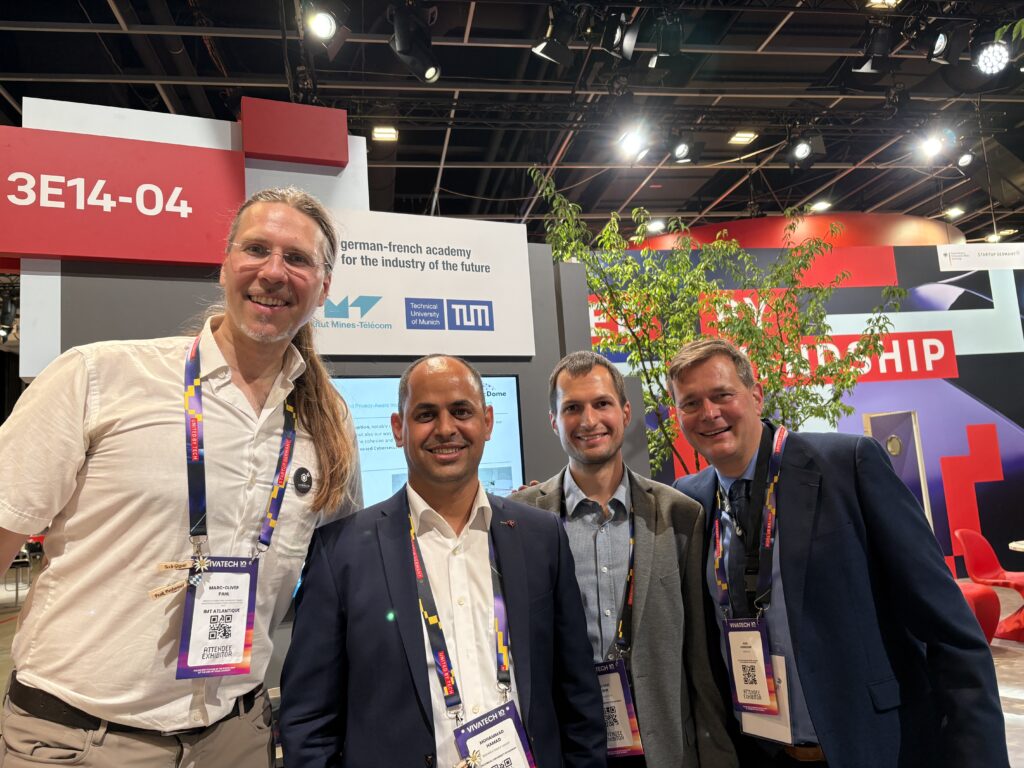
This week at VivaTech 2026 in Paris, I had the pleasure of representing the German-French Academy for the Industry of the Future (GFA) as a member of its Steering Committee.

Hosted in the German Space under the leadership of Paul-Guilhem Meunier (Institut Mines-Télécom) and Axel Honsdorf (Bayerisch-Französisches Hochschulzentrum), we showcased how Franco-German collaboration can drive research, innovation, lifelong learning, and entrepreneurship.

Together with Mohammed Hamad and Michael Kühr, I presented research initiatives from IMT Atlantique and our partners, including:

🔹 TRUE-VIEW – making invisible digital interactions visible through Extended Reality to improve trust, explainability, and cyber resilience.

🔹 DTACK – creating Digital Twins of Cyberattacks for autonomous vehicles, connected mobility, and intelligent transportation systems.

🔹 CyberSecDome – a major European initiative bringing together Airbus, IMT Atlantique, and leading partners across Europe to strengthen the cybersecurity of critical infrastructures.

On the education side, I also presented:

🎓 Future-IoT, the flagship Franco-German doctoral school co-organized with Sebastian Steinhorst (Technical University of Munich), and

🎓 Cybersecurity Essentials: From Risk to Resilience, a MOOC developed within the GFA framework to strengthen cyber skills for SMEs and non-specialists.

The week enabled many inspiring exchanges with colleagues and friends from Institut Mines-Télécom, Technical University of Munich, DFH-UFA, Airbus, Fraunhofer, DFKI, Karlsruhe Institute of Technology, the German Cyber Agency, startups, and innovation actors from both countries.

We were also honoured by visits from François Delattre, Markus Blume, Jürgen Barke, Philippe Gréciano, Andrea von Hülsen-Esch, Virginie Jouhaud-Neutard, Laurence Le Coq, and Juliane Winkelmann.

A strong reminder that cybersecurity, digital sovereignty, innovation, education, and European cooperation are becoming inseparable pillars of our digital future.

#Cybersecurity #CyberResilience #CyberSecDome #CriticalInfrastructures #VivaTech #IMTAtlantique #Airbus #FutureIoT #DigitalTwins #ExtendedReality #DigitalSovereignty #EuropeanResearch #FrancoGermanCooperation

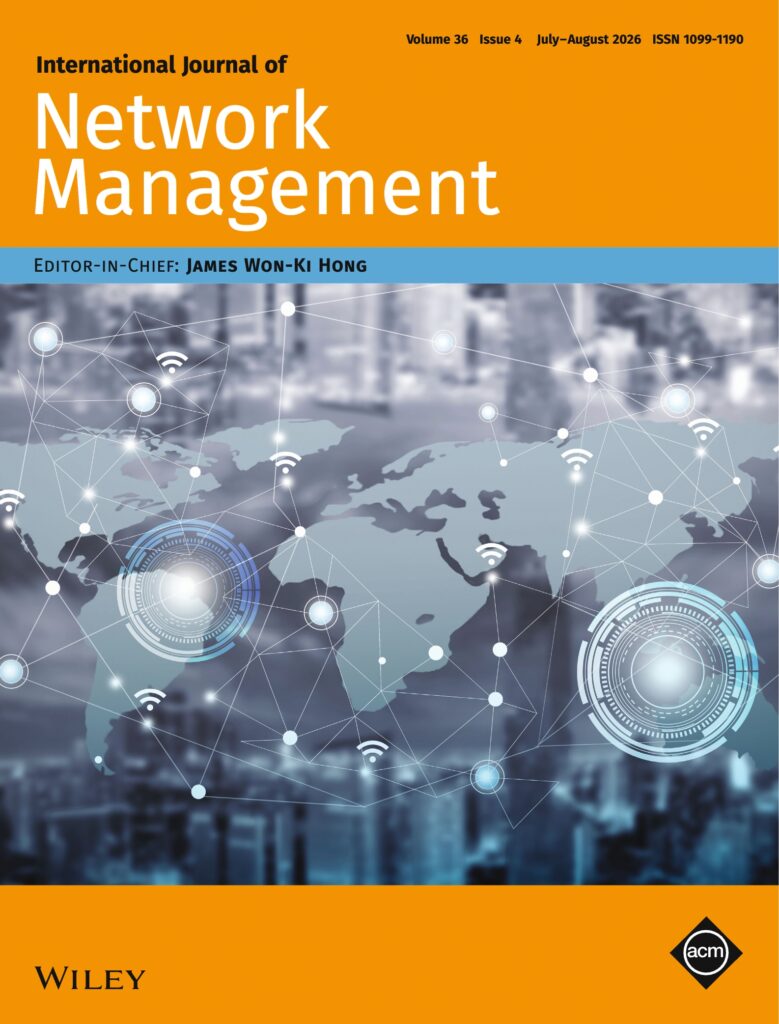
AI-driven Management and MLOps for Networks and Services: Call for Papers for a Special Issue in the International Journal of Network Management

📢 **Call for Papers: Special Issue on AI-driven Management and MLOps for Networks and Services**

🚀 New: Accepted papers are published online immediately after acceptance through Wiley’s continuous publication model, ensuring rapid visibility and impact.

Artificial Intelligence is rapidly becoming the operational core of modern communication systems. From cloud-native infrastructures and edge computing to 6G, IoT, and critical infrastructures, AI is transforming how networks and services are monitored, optimized, secured, and operated.

At the same time, the growing deployment of AI introduces new challenges: How do we manage AI models in production? How do we ensure trustworthiness, explainability, security, resilience, and governance of operational AI systems?

To address these challenges, we are pleased to invite submissions to the Special Issue:

📖 **AI-driven Management and MLOps for Networks and Services**
📍 *International Journal of Network Management (Wiley)*
📅 **Submission Deadline (with CONTINUOUS PUBLISHING UNTIL9: 31 October 2026**

🔗 CFP: https://onlinelibrary.wiley.com/page/journal/10991190/homepage/call-for-papers/si-2026-000414

This Special Issue follows the successful AIMLOps 2026 Workshop at IEEE/IFIP NOMS 2026 in Rome. The quality of the papers, presentations, and discussions demonstrated that AI-driven management and the operational management of AI itself are becoming defining challenges for future communication systems.

We particularly encourage authors to submit work on:
🔹 AI-driven network and service management
🔹 AIOps, MLOps, and LLMOps
🔹 Large Language Models for operations and troubleshooting
🔹 Autonomous and zero-touch networks
🔹 AI for cloud-native, edge, 5G/6G, and IoT environments
🔹 Explainability, transparency, and trust in AI-driven operations
🔹 Security, privacy, and governance of operational AI
🔹 Monitoring, observability, and lifecycle management of AI systems
🔹 Benchmarks, datasets, and operational experiences

For authors of AIMLOps 2026 papers, this is an excellent opportunity to extend your workshop contribution into a mature archival journal publication with deeper evaluation, broader validation, and additional scientific contributions.

We look forward to receiving your submissions and advancing the future of AI-driven networks and services together.

#CallForPapers #AI #AIOps #MLOps #LLMOps #NetworkManagement #ServiceManagement #GenerativeAI #AutonomousNetworks #ZeroTouchNetworks #CloudComputing #6G #IoT #Cybersecurity #ExplainableAI #DigitalSovereignty #CriticalInfrastructures #NOMS2026 #AIMLOps #Research

CyberSecDome Final Plenary Meeting Brings Partners Together in Chania

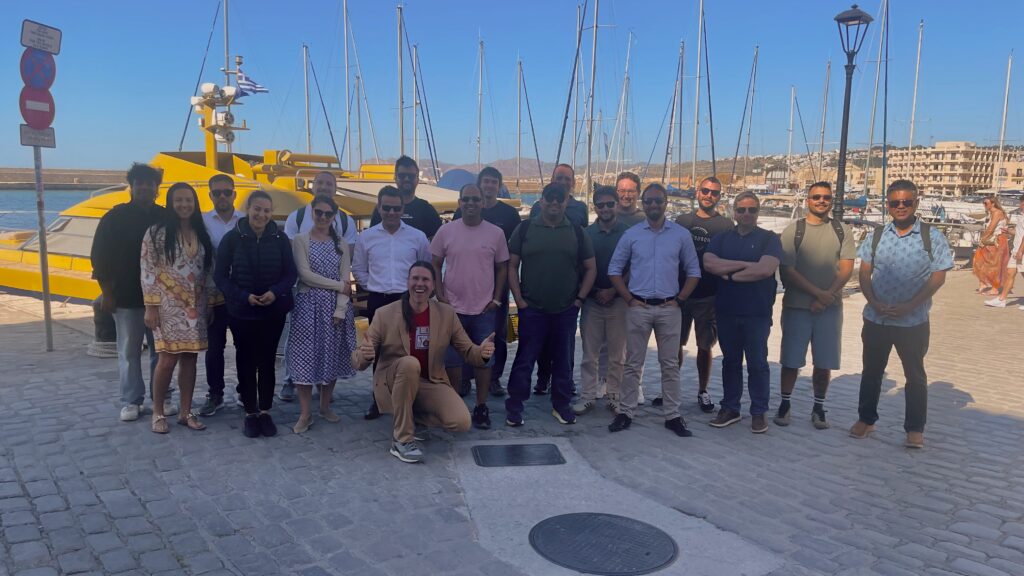
The final plenary meeting of the CyberSecDome project took place this week in Chania, Crete, bringing together partners from across Europe as we prepare for the project’s final review.

Over two days, consortium members discussed pilot progress, platform integration, exploitation activities, Open Call projects, and the next steps towards demonstrating innovative approaches for cyber defence, cyber resilience, incident investigation, and incident response using immersive XR and VR technologies.

It was a pleasure to represent the Chair Cyber CNI, IMT Atlantique, and IRISA alongside Fabien Eyssartier and to exchange with colleagues from across the consortium.

A big thank you to the Technical University of Crete for hosting the event and to all partners for the excellent collaboration throughout the project.

Looking forward to the final project review and to showcasing the results achieved together by MAGGIOLI, Technical University of Crete, IMT Atlantique, IRISA, OTE Group of Companies, Athens International Airport, Airbus CyberSecurity, ITML, AEGIS IT Research, Technical University of Munich, CyberEthics Lab, and all consortium members.

Special thanks to Armend Duzha, Eleni Pateraki, Gregory Chrysos, Andreas Tsigkos, Spiros Fotis, Evangelos Raptis, Vasilis Kyriazopoulos, Gary Joel Pereira, Maxime Bègue, Sébastien Peynet, Mohammad A. Chaqfeh, Marc-Oliver Pahl, Fabien Eyssartier, and the many researchers, engineers, and innovators who contributed to CyberSecDome.

#CyberSecDome #Cybersecurity #CyberDefence #CyberResilience #XR #VirtualReality #IncidentResponse #SOC #CriticalInfrastructure #HorizonEurope #ResearchAndInnovation #IMTAtlantique #IRISA #CyberCNI

CyberSecDome XR Cybersecurity Demo at IRISA

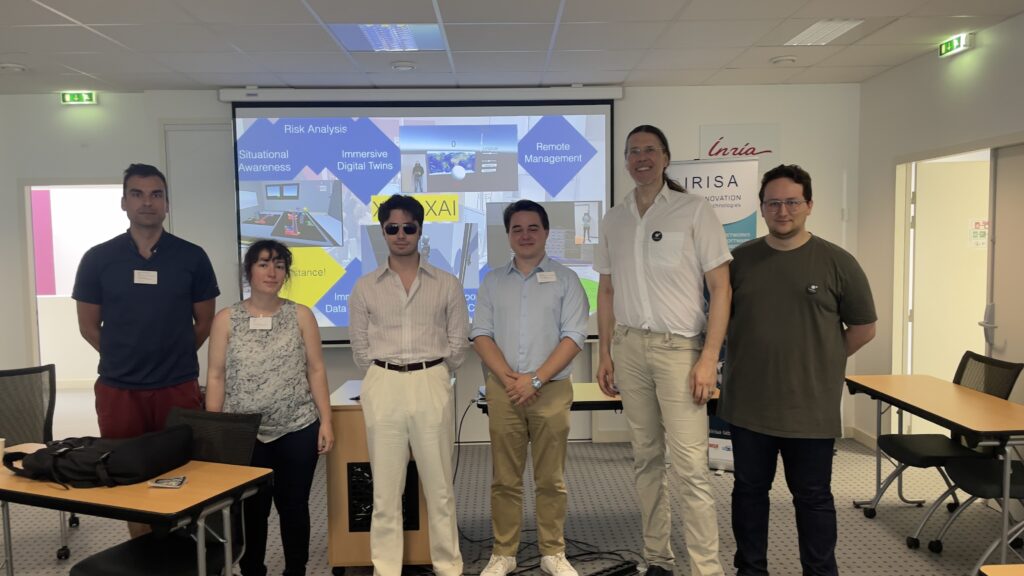
A great day yesterday presenting the European project CyberSecDome at the CNRS UMR IRISA laboratory in Rennes during the visit of the Jeunes IHEDN.

Many thanks to Olivier Barais for opening the session and highlighting the strong cybersecurity ecosystem within IRISA.

As part of the activities carried by the Chaire Cybersécurité des Infrastructures Critiques within the IRISA environment, we presented our work on next-generation cybersecurity interfaces combining AI and XR technologies to improve situational awareness and reduce the cognitive load of cyber experts facing increasingly complex infrastructures.

Marc-Oliver Pahl introduced the CyberSecDome vision, architecture, and operational context, while Fabien Eyssartier delivered an impressive live demonstration of the immersive platform.

The discussions with participants were extremely engaging, ranging from operational cybersecurity to resilience and disinformation challenges. Seeing participants directly experiment with the interfaces and discuss future applications was particularly rewarding.

CyberSecDome continues to demonstrate how Europe can combine AI, immersive technologies, and operational cybersecurity expertise to strengthen the resilience of critical infrastructures.

A real pleasure to support IRISA during this successful event — and we look forward to many future collaborations with the IHEDN community.

#CyberSecurity #CyberDefense #XR #VirtualReality #AI #CriticalInfrastructure #CyberResilience #SituationalAwareness #HorizonEurope #IRISA #IMTAtlantique #CyberSecDome

Wrapping Up an Inspiring Journey in the New Master Cybersecurity Program at IMT Atlantique

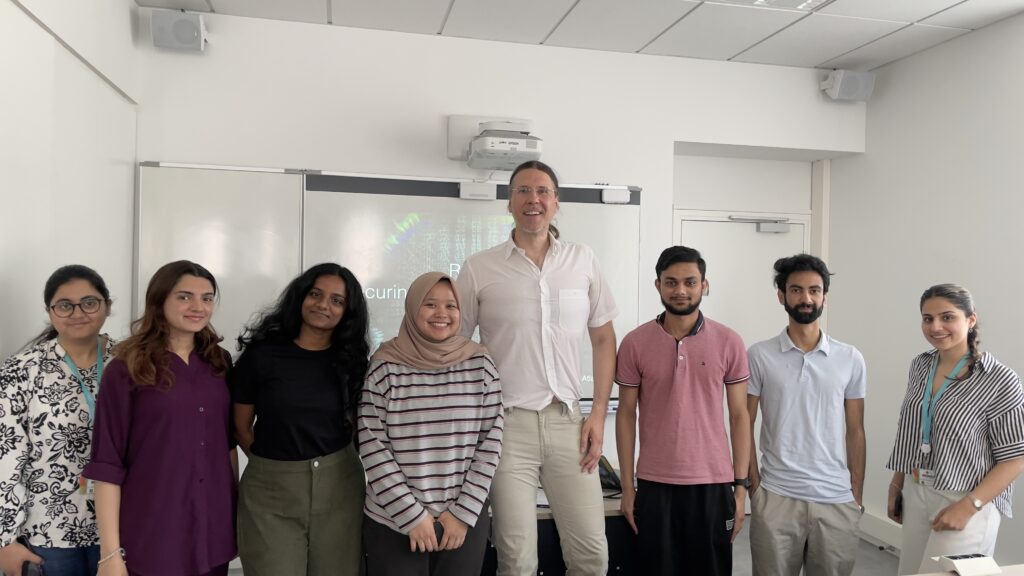
Today was the final session of my teaching engagement in the new Master Cybersecurity program at IMT Atlantique in Rennes — and what an inspiring experience it has been.

Over the past weeks, I had the pleasure of teaching a fantastic group of students in our course on *Securing Critical Infrastructures*. With 8 female and 2 male students, the class brought together strong technical backgrounds, curiosity, critical thinking, and excellent discussions throughout the course.

We explored topics such as:
🔹 OT vs IT security
🔹 Industrial Control Systems (ICS)
🔹 Attack chains and cyber resilience
🔹 Security-by-design
🔹 Monitoring and anomaly detection
🔹 Human-centered cybersecurity
🔹 QUANTUMINSERT, Snowden, and the ethics of cybersecurity

For today’s final recap session before Friday’s exam, we connected all course topics into one big picture: how modern connectivity creates both enormous opportunities and major attack surfaces for critical infrastructures.

I was also very happy to invite two colleagues working with me on current cybersecurity projects:

🔹 Axel Dupraz presented hands-on demonstrations around real-world critical infrastructure cybersecurity challenges and operational exercises.

🔹 Fabien Eyssartier, working with me on the Horizon Europe project CyberSecDome, demonstrated next-generation cybersecurity interfaces and immersive approaches for future SOC environments. This led to fascinating discussions on usability, operator support, situational awareness, and human-centered cybersecurity.

One thing became very clear once again:
Cybersecurity is not only about technology. It is also about humans, communication, decision-making, resilience, and responsibility.

A huge thank you to all students for the excellent atmosphere, the energy, and the many thoughtful discussions throughout the course. Teaching becomes truly rewarding when students actively contribute their own perspectives and experiences.

Now only the written exam on Friday remains.

Good luck to all of you — and thank you for this great experience!

#Cybersecurity #CriticalInfrastructure #ICS #OTSecurity #CyberResilience #SecurityByDesign #CyberDefense #CyberSecDome #HorizonEurope #IndustrialCybersecurity #HumanCenteredCybersecurity #IMTAtlantique #Rennes #Teaching #CyberEducation

The “Management of Complex Threats” workshop at IEEE/IFIP NOMS 2026 was a full success

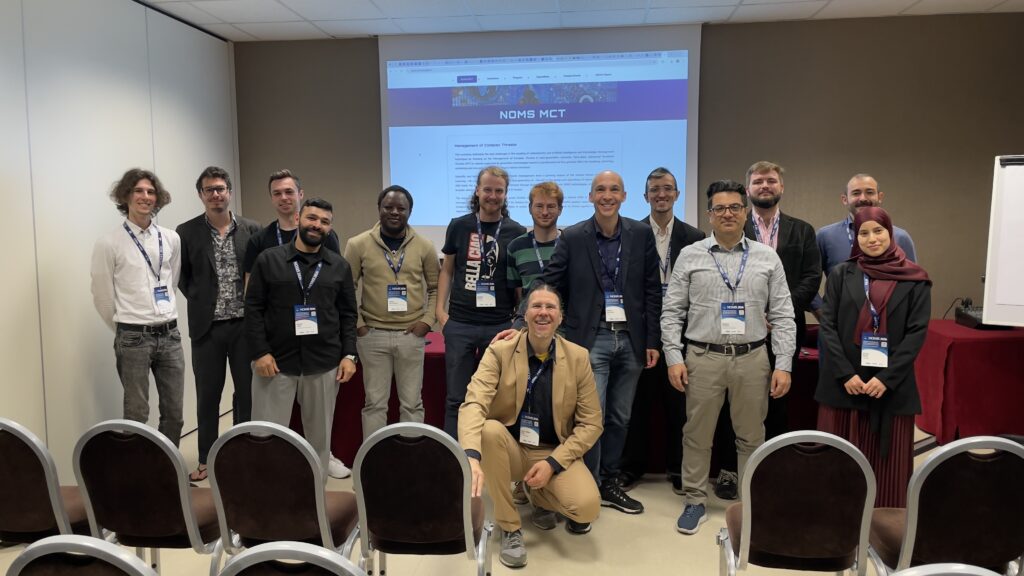
Great discussions today at the “Management of Complex Threats” workshop at IEEE/IFIP NOMS 2026 in Rome!

Together with Pierre Parrend and colleagues from IMT Atlantique and EPITA, and with the support of the CyberSecDome Horizon Europe project, we brought together around 20 researchers and practitioners from across Europe and Asia to discuss the future of AI-driven cybersecurity and the management of complex threats.

The workshop showcased an impressive breadth of topics:
• uncertainty-aware traffic classification from researchers at Czech Technical University in Prague
• adaptive IoT anomaly detection from National Institute of Informatics
• federated security gateways for LLM agents from Hochschule Furtwangen University
• autonomous AI-driven penetration testing from University of Calabria
• LLM-based honeypots from researchers in France
• cyber-physical attacks against cooperative robot systems from Birla Institute of Technology and Science Pilani
• and topology-based cyberattack detection for water distribution systems involving University of Strasbourg, Karlsruhe Institute of Technology, and EPITA.

I was also particularly happy to see strong contributions from the broader Cyber CNI chair ecosystem at IMT Atlantique:

Mathis Durand (Cyber CNI, CNRS UMR IRISA, IMT Atlantique) presented joint work with Yvon Kermarrec and Marc-Oliver Pahl on SSH honeypot realism and fingerprinting resistance. Their work analyzed how ethical hackers detect deception systems in practice and derived a taxonomy of effective honeypot detection techniques.

Mohammed Mezaouli (CNRS Lab-STICC, IMT Atlantique) presented joint work with Yehya Nasser, Samir Saoudi, and Marc-Oliver Pahl on AI-based real-time anomaly detection for embedded C functions using instruction-level traces and current measurements — an exciting step toward protecting resource-constrained IoT systems against zero-day style attacks.

One recurring theme across the workshop was clear: AI is both the attack surface and the defense mechanism. From semantic attacks against LLMs to autonomous penetration testing and trustworthy AI-driven defense systems, future 6G, IoT, and industrial infrastructures will require fundamentally new approaches to resilience and operational security.

A big thank you to all speakers, authors, and participants for the technically deep discussions and excellent atmosphere throughout the day!

Industrial Networking Beyond Connectivity: Key Scientific and Cybersecurity Challenges Discussed at NOMS 2026

Industrial networking is reaching a turning point.

We are moving from isolated PLC-centric systems toward distributed AI-assisted cloud-edge infrastructures running industrial protocols over IP networks.

But here is the uncomfortable question:

Can probabilistic IT and cloud infrastructures ever truly satisfy deterministic industrial requirements?

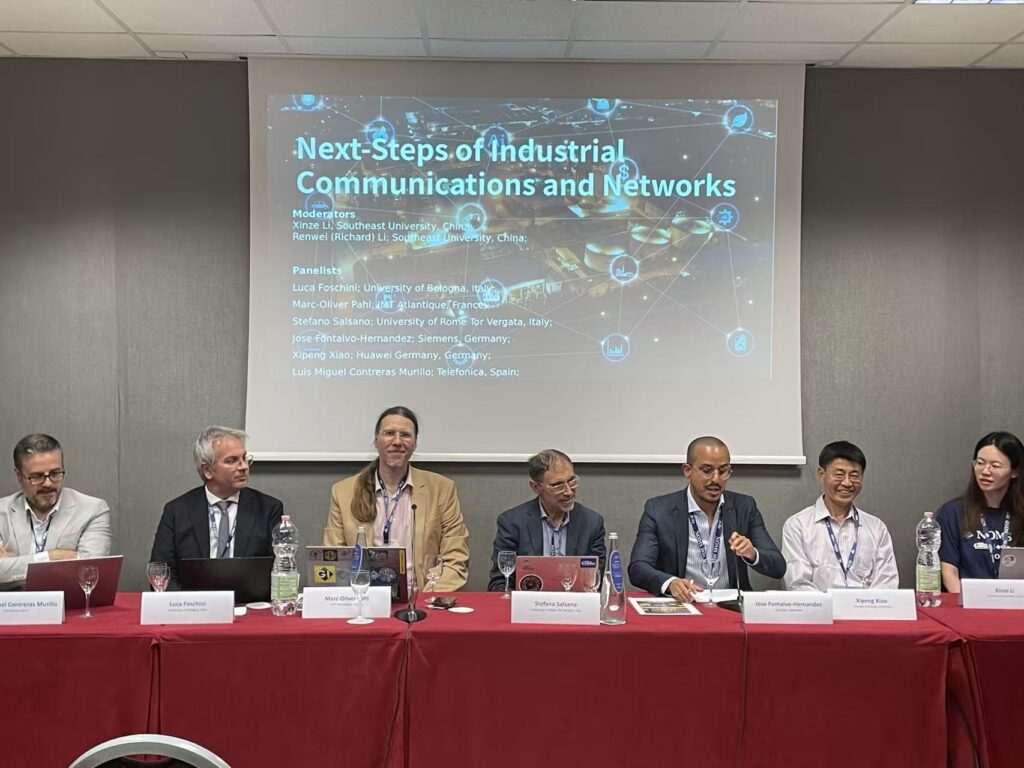
At our NOMS 2026 panel on *“Next Steps of Industrial Communications and Networks”*, we debated topics such as:

* industrial protocols over Layer 3/IP,
* strict SLA enforcement,
* virtualized PLCs,
* AI-driven operational management,
* cloud-edge continuums,
* and the growing cybersecurity risks of converged IT/OT infrastructures.

One insight from the discussion stayed with me:

**Risk = Probability × Impact**

In industrial systems:

* the probability of failures or attacks on complex IP-based infrastructures is non-negligible,
* while the impact can be catastrophic.

That fundamentally changes the networking equation.

My conclusion:
Industrial networking is no longer merely a connectivity problem.
It is becoming a **trustworthy autonomy and resilience problem**.

And perhaps the most controversial question:
Will AI become the only realistic way to manage the operational complexity we are creating ourselves?

I summarized the key scientific debates, disagreements, and cybersecurity implications from the panel in a longer article below.

I would genuinely love to hear different opinions from academia and industry:
Are today’s IP/cloud-native architectures sufficient for future industrial systems — or do we need fundamentally new networking paradigms?

#NOMS2026 #IndustrialNetworking #Industry40 #Industry50 #Cybersecurity #IndustrialAI #CloudNative #EdgeComputing #OTITConvergence #Resilience #AI

With:Xinze Li (Southeast University, China), Renwei “Richard” Li (Southeast University, China), Luca Foschini (University of Bologna, Italy), Marc-Oliver Pahl (IMT Atlantique, France), Stefano Salsano (University of Rome Tor Vergata, Italy), Jose Fontalvo-Hernandez (Siemens AG, Germany), Xipeng Xiao (Huawei Germany, Germany), Luis Miguel Contreras Murillo (Telefónica, Spain)

AIMLOps 2026 Workshop at IEEE/IFIP NOMS 2026 a Great Success

🚀 AI is rapidly transforming from a support tool into the operational core of future communication systems — and this was exactly the focus of the 1st AIMLOps Workshop at IEEE/IFIP NOMS 2026 in Rome.

Co-organized by Marc-Oliver Pahl (IMT Atlantique / Chaire Cyber CNI), Hanan Lutfiyya (University of Waterloo), and Stuart Clayman (University College London), the workshop brought together researchers and practitioners from across Europe, North America, and Asia to discuss the future of autonomous and AI-driven network and service management.

The workshop saw strong engagement throughout the entire day:
📌 22 participants in Session 1
📌 32 participants in Session 2
📌 27 participants in Session 3
📌 25 participants in Session 4

What stood out most was the exceptional quality of the papers and the depth of the discussions. Topics ranged from:
🔹 AI-driven cybersecurity and anomaly detection
🔹 Explainable AI (XAI) for trustworthy operations
🔹 MLOps and LLMOps for AI lifecycle management
🔹 Multimodal LLMs for troubleshooting and network management
🔹 Autonomous protocol translation for IoT interoperability
🔹 AI assurance for distributed AI infrastructures
🔹 Sovereign European cloud and AI infrastructures

The Cyber CNI Chaire ecosystem was strongly represented with two research contributions addressing key challenges for future autonomous critical infrastructures.

A first contribution was presented by Mohammed Mezaouli (CNRS Lab-STICC, IMT Atlantique, Brest, France) together with Yehya Nasser, Samir Saoudi, and Marc-Oliver Pahl. Their paper, *“Closing the Loop in Embedded Security: Evolution of an AIOps Framework for Threat Hunting,”* explored how AIMLOps methodologies can secure resource-constrained embedded systems in future 6G and IoT environments through adaptive AI pipelines, side-channel telemetry analysis, continuous model adaptation, and zero-day vulnerability detection. The work demonstrated how AI lifecycle management can become a core building block for embedded cybersecurity operations.

A second Chaire-related contribution was presented by Marc-Oliver Pahl together with his PhD student Christian Lübben from the Technical University of Munich. Their paper, *“Gateway-X: LLM-based Autonomous Adaptive Semantic and Syntactic Protocol Translation,”* addressed one of the central challenges of heterogeneous IoT and industrial environments: interoperability. The work proposed a fully automated AI-driven gateway architecture capable of performing both syntactic and semantic protocol translation using Large Language Models. The research explored how Generative AI can automate “semantic interoperability” between heterogeneous systems and protocols, opening new perspectives for autonomous IoT integration, intelligent gateways, and zero-touch operations in future cyber-physical infrastructures.

The keynote sessions perfectly complemented the technical program.

🎤 Deep Medhi (National Science Foundation, USA) delivered the keynote *“When Networks Think for Themselves: Who Is in-charge?”* and challenged the community to rethink trust, explainability, and control in future autonomous and zero-touch networks where AI systems increasingly make operational decisions themselves.

🎤 Hans Torben Löfflad and Manuel Hoffmann from STACKIT presented *“A European Data & AI Strategy – A Cloud Provider’s View.”* Their keynote addressed sovereign European cloud infrastructures, large-scale AI model serving, Kubernetes-based AI platforms, and Europe’s path toward digital sovereignty.

This discussion was particularly timely as STACKIT was recently selected by the European Commission as one of the providers for the EU Sovereign Cloud procurement initiative — a major milestone for resilient and sovereign European digital infrastructures and highly relevant for research on cyber-secure critical infrastructures.

A huge thank you to all authors, keynote speakers, participants, and organizers for making AIMLOps 2026 such an engaging and inspiring event. The workshop clearly demonstrated that AI lifecycle management, operational trustworthiness, resilience, sovereignty, and interoperability are becoming defining challenges for the future of networking and distributed systems.

#AIMLOps #NOMS2026 #AI #AIOps #MLOps #LLMOps #AutonomousNetworks #Cybersecurity #DigitalSovereignty #SovereignCloud #6G #IoT #NetworkManagement #GenerativeAI #CloudComputing #Interoperability #CyberCNI

View More