Chaire Cyber CNI

Chaire Cyber CNI – Cybersecurity for Critical Networked Infrastructures

Cybersecurity of Critical Infrastructures at VivaTech 2026: From Research Innovation to European Cyber Resilience

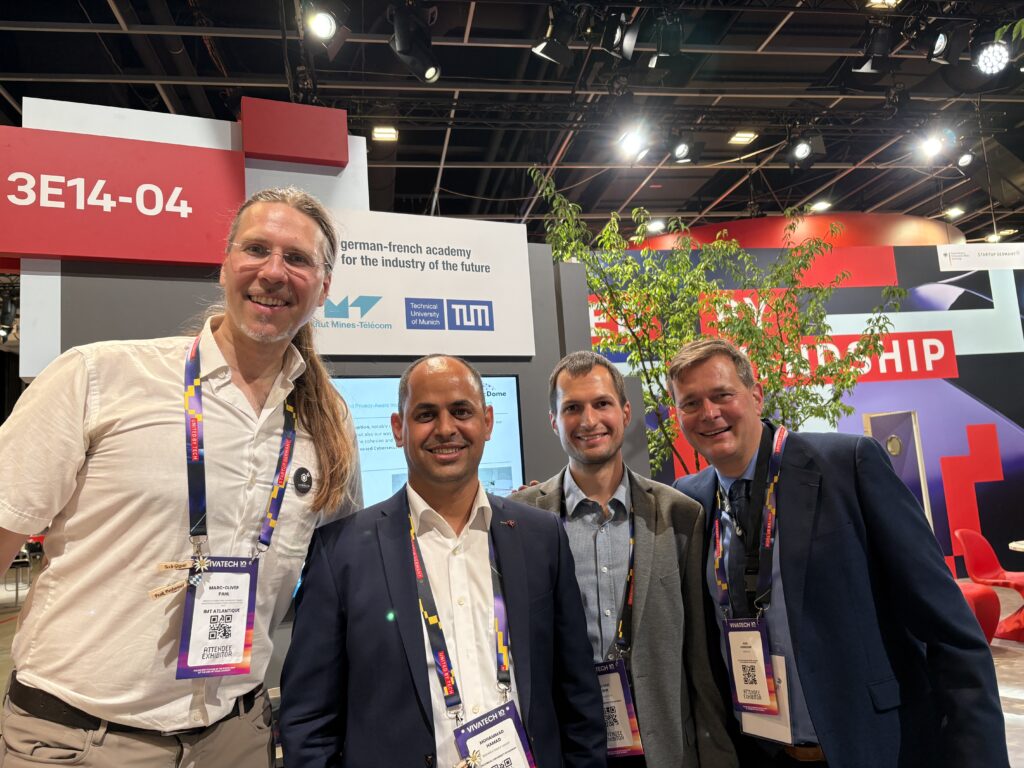
This week at VivaTech 2026 in Paris, I had the pleasure of representing the German-French Academy for the Industry of the Future (GFA) as a member of its Steering Committee.

Hosted in the German Space under the leadership of Paul-Guilhem Meunier (Institut Mines-Télécom) and Axel Honsdorf (Bayerisch-Französisches Hochschulzentrum), we showcased how Franco-German collaboration can drive research, innovation, lifelong learning, and entrepreneurship.

Together with Mohammed Hamad and Michael Kühr, I presented research initiatives from IMT Atlantique and our partners, including:

🔹 TRUE-VIEW – making invisible digital interactions visible through Extended Reality to improve trust, explainability, and cyber resilience.

🔹 DTACK – creating Digital Twins of Cyberattacks for autonomous vehicles, connected mobility, and intelligent transportation systems.

🔹 CyberSecDome – a major European initiative bringing together Airbus, IMT Atlantique, and leading partners across Europe to strengthen the cybersecurity of critical infrastructures.

On the education side, I also presented:

🎓 Future-IoT, the flagship Franco-German doctoral school co-organized with Sebastian Steinhorst (Technical University of Munich), and

🎓 Cybersecurity Essentials: From Risk to Resilience, a MOOC developed within the GFA framework to strengthen cyber skills for SMEs and non-specialists.

The week enabled many inspiring exchanges with colleagues and friends from Institut Mines-Télécom, Technical University of Munich, DFH-UFA, Airbus, Fraunhofer, DFKI, Karlsruhe Institute of Technology, the German Cyber Agency, startups, and innovation actors from both countries.

We were also honoured by visits from François Delattre, Markus Blume, Jürgen Barke, Philippe Gréciano, Andrea von Hülsen-Esch, Virginie Jouhaud-Neutard, Laurence Le Coq, and Juliane Winkelmann.

A strong reminder that cybersecurity, digital sovereignty, innovation, education, and European cooperation are becoming inseparable pillars of our digital future.

#Cybersecurity #CyberResilience #CyberSecDome #CriticalInfrastructures #VivaTech #IMTAtlantique #Airbus #FutureIoT #DigitalTwins #ExtendedReality #DigitalSovereignty #EuropeanResearch #FrancoGermanCooperation
AI-driven Management and MLOps for Networks and Services: Call for Papers for a Special Issue in the International Journal of Network Management

📢 **Call for Papers: Special Issue on AI-driven Management and MLOps for Networks and Services**

🚀 New: Accepted papers are published online immediately after acceptance through Wiley’s continuous publication model, ensuring rapid visibility and impact.

Artificial Intelligence is rapidly becoming the operational core of modern communication systems. From cloud-native infrastructures and edge computing to 6G, IoT, and critical infrastructures, AI is transforming how networks and services are monitored, optimized, secured, and operated.

At the same time, the growing deployment of AI introduces new challenges: How do we manage AI models in production? How do we ensure trustworthiness, explainability, security, resilience, and governance of operational AI systems?

To address these challenges, we are pleased to invite submissions to the Special Issue:

📖 **AI-driven Management and MLOps for Networks and Services**
📍 *International Journal of Network Management (Wiley)*
📅 **Submission Deadline (with CONTINUOUS PUBLISHING UNTIL9: 31 October 2026**

🔗 CFP: https://onlinelibrary.wiley.com/page/journal/10991190/homepage/call-for-papers/si-2026-000414

This Special Issue follows the successful AIMLOps 2026 Workshop at IEEE/IFIP NOMS 2026 in Rome. The quality of the papers, presentations, and discussions demonstrated that AI-driven management and the operational management of AI itself are becoming defining challenges for future communication systems.

We particularly encourage authors to submit work on:
🔹 AI-driven network and service management
🔹 AIOps, MLOps, and LLMOps
🔹 Large Language Models for operations and troubleshooting
🔹 Autonomous and zero-touch networks
🔹 AI for cloud-native, edge, 5G/6G, and IoT environments
🔹 Explainability, transparency, and trust in AI-driven operations
🔹 Security, privacy, and governance of operational AI
🔹 Monitoring, observability, and lifecycle management of AI systems
🔹 Benchmarks, datasets, and operational experiences

For authors of AIMLOps 2026 papers, this is an excellent opportunity to extend your workshop contribution into a mature archival journal publication with deeper evaluation, broader validation, and additional scientific contributions.

We look forward to receiving your submissions and advancing the future of AI-driven networks and services together.

#CallForPapers #AI #AIOps #MLOps #LLMOps #NetworkManagement #ServiceManagement #GenerativeAI #AutonomousNetworks #ZeroTouchNetworks #CloudComputing #6G #IoT #Cybersecurity #ExplainableAI #DigitalSovereignty #CriticalInfrastructures #NOMS2026 #AIMLOps #Research

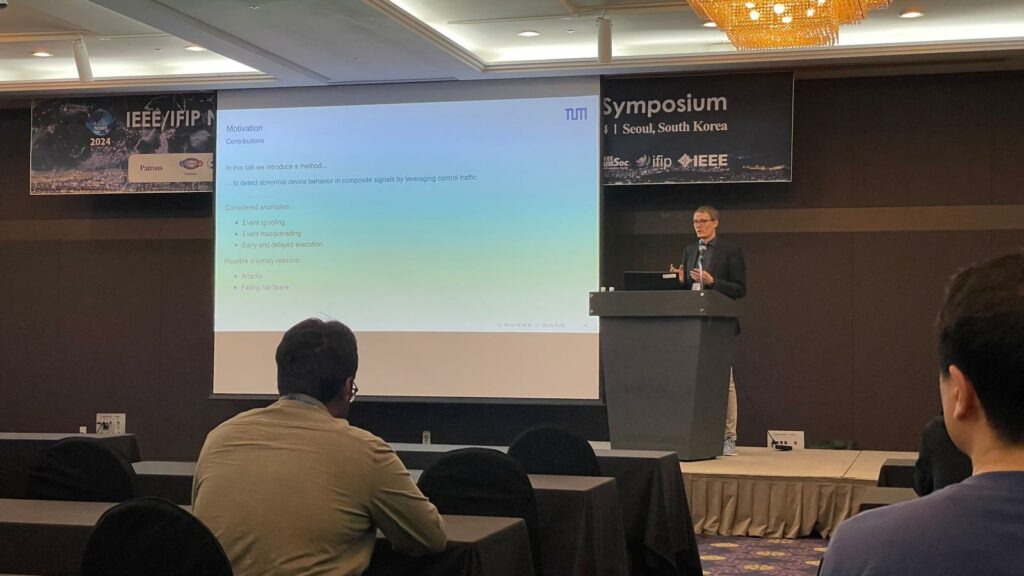
The “Management of Complex Threats” workshop at IEEE/IFIP NOMS 2026 was a full success

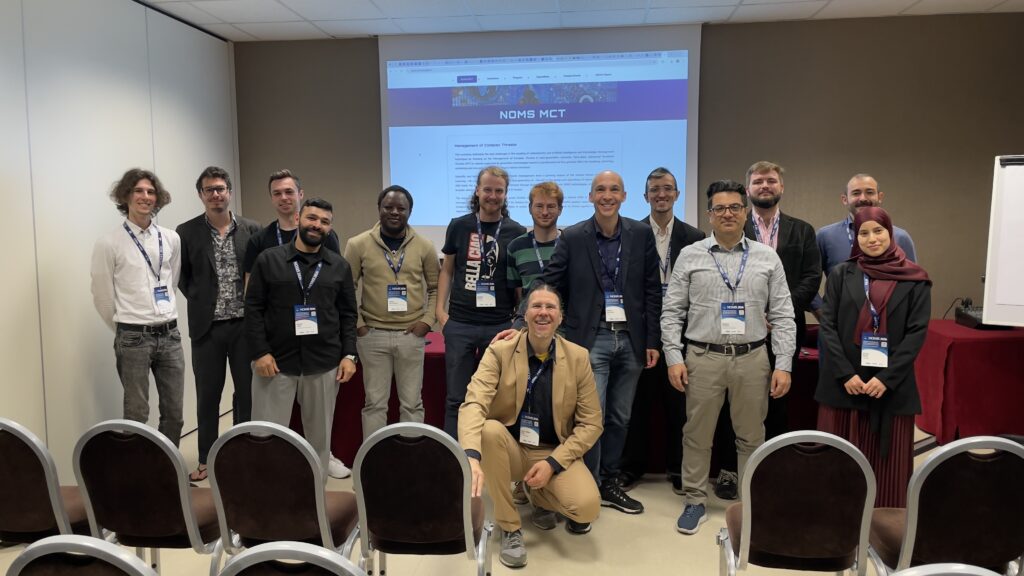
Great discussions today at the “Management of Complex Threats” workshop at IEEE/IFIP NOMS 2026 in Rome!

Together with Pierre Parrend and colleagues from IMT Atlantique and EPITA, and with the support of the CyberSecDome Horizon Europe project, we brought together around 20 researchers and practitioners from across Europe and Asia to discuss the future of AI-driven cybersecurity and the management of complex threats.

The workshop showcased an impressive breadth of topics:
• uncertainty-aware traffic classification from researchers at Czech Technical University in Prague
• adaptive IoT anomaly detection from National Institute of Informatics
• federated security gateways for LLM agents from Hochschule Furtwangen University
• autonomous AI-driven penetration testing from University of Calabria
• LLM-based honeypots from researchers in France
• cyber-physical attacks against cooperative robot systems from Birla Institute of Technology and Science Pilani
• and topology-based cyberattack detection for water distribution systems involving University of Strasbourg, Karlsruhe Institute of Technology, and EPITA.

I was also particularly happy to see strong contributions from the broader Cyber CNI chair ecosystem at IMT Atlantique:

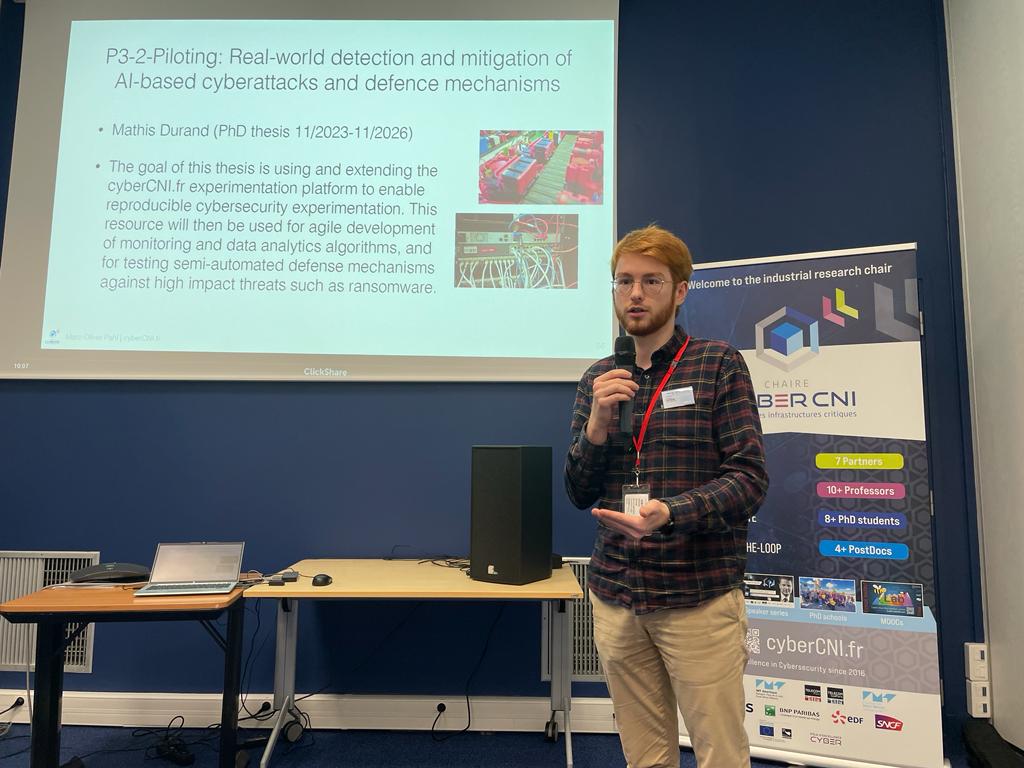
Mathis Durand (Cyber CNI, CNRS UMR IRISA, IMT Atlantique) presented joint work with Yvon Kermarrec and Marc-Oliver Pahl on SSH honeypot realism and fingerprinting resistance. Their work analyzed how ethical hackers detect deception systems in practice and derived a taxonomy of effective honeypot detection techniques.

Mohammed Mezaouli (CNRS Lab-STICC, IMT Atlantique) presented joint work with Yehya Nasser, Samir Saoudi, and Marc-Oliver Pahl on AI-based real-time anomaly detection for embedded C functions using instruction-level traces and current measurements — an exciting step toward protecting resource-constrained IoT systems against zero-day style attacks.

One recurring theme across the workshop was clear: AI is both the attack surface and the defense mechanism. From semantic attacks against LLMs to autonomous penetration testing and trustworthy AI-driven defense systems, future 6G, IoT, and industrial infrastructures will require fundamentally new approaches to resilience and operational security.

A big thank you to all speakers, authors, and participants for the technically deep discussions and excellent atmosphere throughout the day!

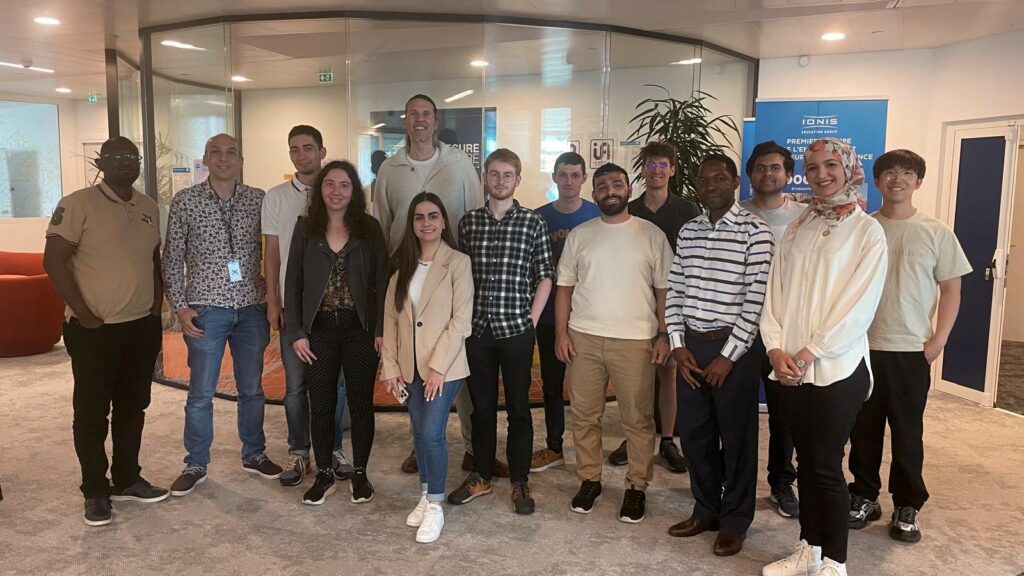
Innovative Approaches in Anomaly Detection: Insights from the EPITA and IMT Atlantique Seminar

Excited to share highlights from the EPITA and IMT Atlantique research exchange seminar on anomaly detection in cybersecurity! Brilliant minds from both institutions presented cutting-edge techniques and fostered insightful discussions. Looking forward to more such collaborative events!

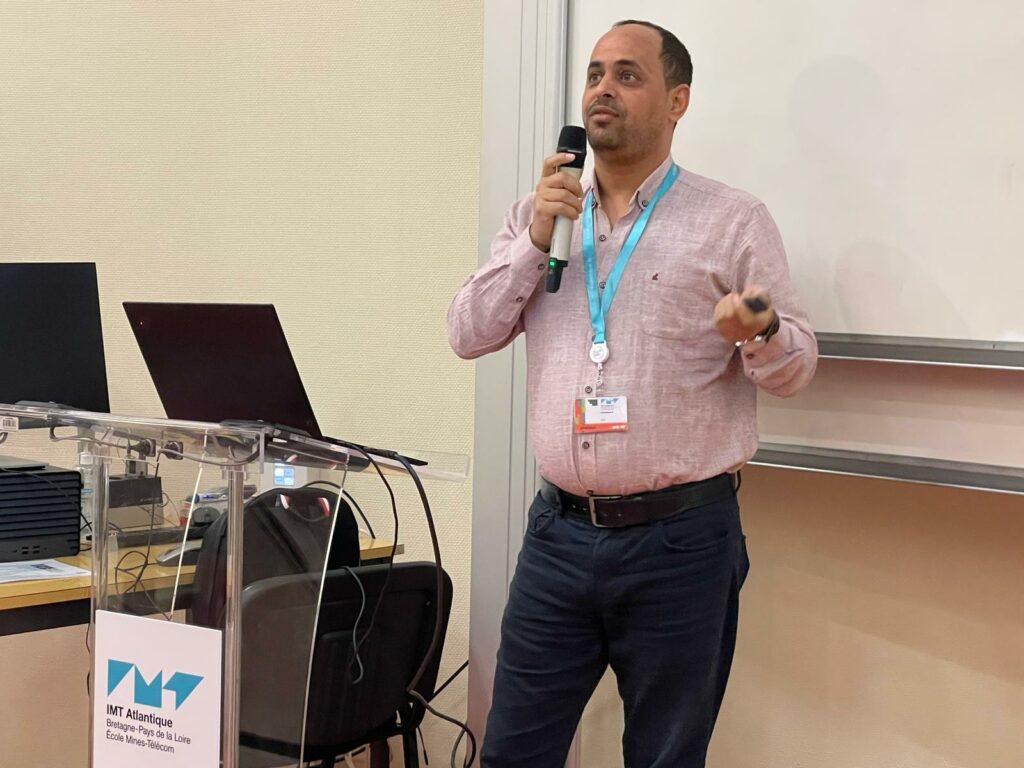
Securing Autonomous and Connected Vehicles: Cybersecurity Challenges, Mohammad Hamad (TUM)

🔒 Excited to share insights from Mohammad Hamad’s talk on “Securing Autonomous and Connected Vehicles: Cybersecurity Challenges” at IMT Atlantique! Learn about innovative solutions and collaborative projects tackling cybersecurity threats in the automotive industry. #Cybersecurity #AutonomousVehicles #ConnectedVehicles #Research #TechTalk

View More